A comprehensive guide to BPC-157 dosing in published research — covering dose ranges, routes of administration, protocol durations, and why vial-based delivery improves experimental consistency.
9 min read · Updated 2026-03-17
What Is BPC-157?
BPC-157 (Body Protection Compound-157) is a synthetic pentadecapeptide derived from a partial sequence of body protection compound (BPC), a protein found in human gastric juice. Its 15-amino-acid sequence (Gly-Glu-Pro-Pro-Pro-Gly-Lys-Pro-Ala-Asp-Asp-Ala-Gly-Leu-Val) has been the subject of over 100 peer-reviewed studies since the early 1990s.
BPC-157 is classified as a stable gastric pentadecapeptide — meaning it resists degradation in the acidic gastric environment, unlike most peptides. This stability is a key property that differentiates it from other research peptides and has implications for route-of-administration studies.
The peptide is researched primarily for its effects on tissue repair, angiogenesis (blood vessel formation), tendon and ligament healing, gastrointestinal protection, and nitric oxide system modulation. It is sold strictly for research purposes.
Published Dosage Ranges in Research
BPC-157 dosing in the published literature spans a wide range depending on the research model and route of administration. The following doses are drawn from peer-reviewed studies:
In vivo studies (animal models):
- Standard research dose: 10 μg/kg body weight — the most commonly used dose across published BPC-157 studies. This dose has shown consistent effects on tendon healing (Staresinic et al., 2003), muscle repair (Pevec et al., 2010), and gastrointestinal protection (Sikiric et al., 1993). - Low dose: 1-5 μg/kg — used in some studies to establish dose-response curves. At 1 μg/kg, effects are typically sub-therapeutic in animal models. - High dose: 50-100 μg/kg — used in some acute injury models. Generally does not produce proportionally greater effects compared to 10 μg/kg, suggesting a plateau effect.
Weight-based calculation example:
For a 250g rat (standard laboratory weight): - 10 μg/kg = 2.5 μg per administration - Typical protocol: once daily for 14-28 days
Duration protocols in published research:
- Tendon repair studies: 14-28 days (Staresinic et al., Chang et al.) - Muscle healing: 14 days (Pevec et al.) - Gastrointestinal studies: 7-14 days (Sikiric et al.) - Bone healing: 14-28 days (Sebecic et al.) - Neuroprotection: 7-21 days (Boban Blagaic et al.)
The 10 μg/kg daily dose for 14 days represents the most replicated protocol across the BPC-157 literature.
RECOMMENDED PRODUCT
Routes of Administration
BPC-157 has been studied via multiple routes of administration, each with distinct implications for research design:
Subcutaneous (SC) injection — most common:
The majority of published BPC-157 research uses subcutaneous injection, typically in the abdominal or dorsal area of animal models. SC administration provides:
- Consistent systemic bioavailability - Slow, sustained release from the injection site - Ease of repeated daily dosing - Well-suited for musculoskeletal, GI, and neuroprotection studies
Intraperitoneal (IP) injection:
Used in many early BPC-157 studies (Sikiric et al., 1993-2000). IP injection provides rapid systemic absorption and is standard in rodent pharmacology. Results are generally comparable to SC at equivalent doses.
Intramuscular (IM) injection:
Used in studies focused on localised muscle or tendon repair. IM injection near the injury site may provide higher local peptide concentrations. Some researchers prefer this route for musculoskeletal studies.
Topical application:
BPC-157 applied topically (in cream or gel vehicle) has shown effects on wound healing and skin lesions in some studies. Absorption is more variable than injection routes.
Oral (per os) administration:
BPC-157's gastric stability makes it one of the few peptides that retains bioactivity when administered orally. Studies by Sikiric et al. have demonstrated oral BPC-157 efficacy for GI protection, suggesting it may act locally on the gastrointestinal mucosa as well as systemically.
For most research protocols, subcutaneous injection remains the gold standard due to its reproducibility, consistent absorption, and extensive validation in the literature.
Dosing Precision: Lyophilized vs Liquid
Accurate dosing is critical in peptide research — especially for dose-response studies and protocol replication. The delivery format directly affects experimental precision.
Traditional vial dosing process:
1. Reconstitute lyophilised BPC-157 powder with bacteriostatic water 2. Calculate volume per dose based on concentration 3. Draw from vial using insulin syringe 4. Administer via injection
Variability sources in vial dosing:
- Reconstitution volume accuracy (±5-10% typical) - Syringe reading precision, especially at small volumes - Foaming during reconstitution reducing effective concentration - Peptide adhesion to vial walls and syringe barrel - Repeated vial piercing introducing contaminants - Cumulative error across multiple calculation steps - Total dosing variance: typically ±10-15%
Peptides Pharma Research Vial dosing:
- Factory-mixed to precise concentration - Dial-a-dose mechanism delivers calibrated amounts per click - No reconstitution, no concentration calculations - Sealed cartridge — no vial piercing or contamination risk - Consistent from first dose to last - Total dosing variance: <2%
For a BPC-157 study where the target dose is 10 μg/kg, the difference between ±15% and <2% variance can be the difference between publishable and non-publishable data. Over a 28-day protocol with daily administrations, the cumulative accuracy advantage of vial dosing is substantial.
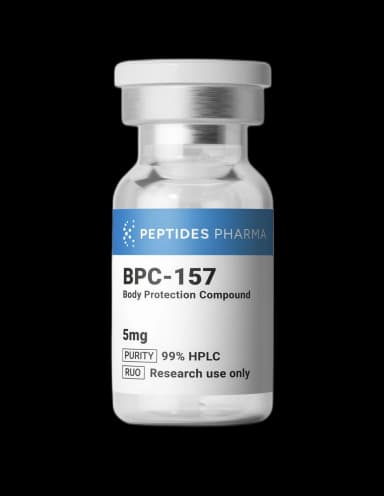
Peptides Pharma's BPC-157 Research Vial contains pharmaceutical-grade BPC-157 at >99% purity, pre-mixed and ready for immediate use in research protocols.
RECOMMENDED PRODUCT
Combining BPC-157 with Other Peptides
Published research and evolving research protocols frequently combine BPC-157 with complementary peptides. The most studied combinations include:
BPC-157 + TB-500 (Thymosin Beta-4 fragment):
This is the most widely discussed peptide combination in regenerative research. The rationale:
- BPC-157 promotes angiogenesis and growth factor upregulation - TB-500 enhances cell migration and reduces inflammation - Complementary mechanisms may produce additive or synergistic tissue repair effects - Both have favourable safety profiles in published literature
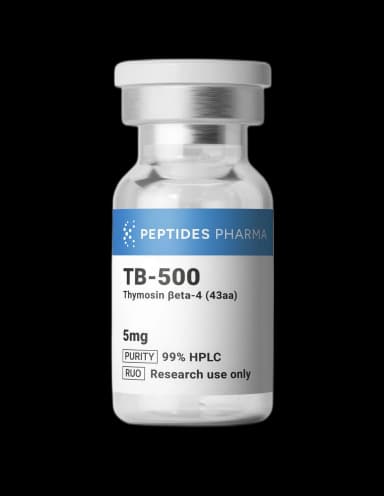
Published doses when combined: BPC-157 at 10 μg/kg + TB-500 at 2-5 mg per administration (in animal models). Peptides Pharma offers both BPC-157 and TB-500 in vial format, enabling precise dosing of each compound.
BPC-157 + GHK-Cu:
GHK-Cu (copper peptide) is researched for wound healing, skin regeneration, and anti-inflammatory effects. Some protocols combine BPC-157 (systemic administration) with GHK-Cu (topical or systemic) for tissue repair studies. The mechanisms are distinct — BPC-157 acts via nitric oxide system modulation and growth factor upregulation, while GHK-Cu primarily affects collagen synthesis and antioxidant enzyme expression.
Timing considerations:
When combining peptides, researchers typically administer each compound at its standard individual dose. Some protocols separate administrations by 30-60 minutes; others co-administer. There is limited published data on optimal timing for peptide combinations, representing an active area of investigation.
Storage, Stability, and Handling
Proper storage is essential for maintaining BPC-157 potency throughout a research protocol. Degraded peptides produce inconsistent results and waste resources.
Lyophilised (powder) BPC-157:
- Store at -20°C for long-term storage (>6 months) - Stable at 2-8°C for up to 12 months - Protect from light and moisture - Once reconstituted, use within 2-4 weeks - Store reconstituted solution at 2-8°C, never freeze
Peptides Pharma BPC-157 Pen (pre-mixed solution):
- Store at 2-8°C (standard laboratory refrigerator) - 24-month shelf life from manufacture - No reconstitution required — factory-sealed stability - Sealed cartridge protects from light and oxidation - No degradation from repeated vial piercing
Common handling mistakes that reduce BPC-157 potency:
- Shaking the vial during reconstitution — peptides are sensitive to mechanical stress. Swirl gently instead. - Using non-bacteriostatic water — sterile water without the benzyl alcohol preservative allows bacterial growth within days - Room temperature storage of reconstituted solution — accelerates degradation exponentially - Freezing reconstituted solution — can cause peptide aggregation and precipitation - Excessive light exposure — UV light degrades peptide bonds
Peptides Pharma's vial format eliminates most of these handling risks by providing BPC-157 in a pre-mixed, sealed, light-protected cartridge ready for immediate research use.
Designing a BPC-157 Research Protocol
For researchers designing a new BPC-157 study, the following framework synthesises the most common published approaches:
Step 1: Define the research question. What tissue or system are you studying? Musculoskeletal, gastrointestinal, neurological, or cardiovascular? The answer determines route of administration and potentially the optimal dose.
Step 2: Select the dose. 10 μg/kg body weight is the most replicated dose and the recommended starting point for new investigations. Use a dose-response design (1, 10, 50 μg/kg) if establishing efficacy for a novel application.
Step 3: Choose the route of administration. Subcutaneous injection for systemic studies. Intramuscular for localised musculoskeletal research. Oral for gastrointestinal studies (leveraging BPC-157's unique gastric stability).
Step 4: Set the duration. 14 days is the most common protocol length. Extend to 28 days for bone or chronic injury models. Use 7 days for acute GI protection studies.
Step 5: Select the delivery format. For protocols where dosing precision is critical (dose-response studies, replication attempts, multi-site studies), vial-based delivery offers superior accuracy. For preliminary investigations where approximate dosing is acceptable, reconstituted vials remain an option.
Step 6: Include appropriate controls. Vehicle control (bacteriostatic water or vial excipient), positive control (if available for the tissue model), and blinding of outcome assessors are standard.
Step 7: Determine endpoints and timeline. Histological, biomechanical, and molecular endpoints at protocol completion. Consider interim assessments at 7 and 14 days for 28-day protocols.
Safety Profile in Published Research
BPC-157 has an extensive safety record in the published literature, spanning over three decades of research:
Toxicity studies. No lethal dose (LD-1) has been identified for BPC-157 in animal models — even at doses far exceeding standard research protocols (up to 10 mg/kg, or 1,000 times the standard 10 μg/kg dose). This exceptionally wide therapeutic window is unusual among bioactive peptides.
Chronic administration. Studies using daily BPC-157 administration for up to 6 months in animal models have not reported significant adverse effects.
Drug interactions. BPC-157 has been studied alongside NSAIDs, corticosteroids, and other medications with no reported negative interactions. Its gastroprotective properties may actually counteract NSAID-induced gastric damage, which has been a specific area of investigation.
Limitations of current evidence:
- The vast majority of data is from animal (primarily rodent) studies - No completed Phase 3 human clinical trials as of 2026 - Long-term safety in human use has not been systematically evaluated - As with all research peptides, BPC-157 is for research purposes only
Peptides Pharma's BPC-157 is manufactured in GMP-certified facilities with >99% purity verified by independent HPLC and mass spectrometry analysis. Each batch comes with a full Certificate of Analysis.