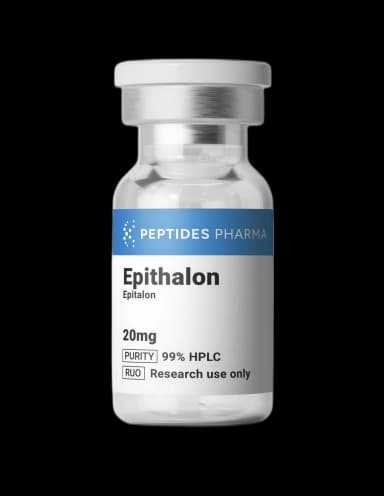
Epithalon (AEDG) is a synthetic tetrapeptide studied for its ability to activate telomerase, regulate melatonin synthesis, and extend lifespan in animal models through pineal gland modulation.
11 min read · Updated 2026-04-03
What Is Epithalon (AEDG Peptide)?
Epithalon, also known as Epitalon or Epithalone, is a synthetic tetrapeptide with the amino acid sequence Ala-Glu-Asp-Gly (AEDG). Developed by Professor Vladimir Khavinson at the Saint Petersburg Institute of Bioregulation and Gerontology in Russia, Epithalon represents decades of research into peptide bioregulators — short peptides that regulate gene expression in specific tissues.
Epithalon is the synthetic analogue of Epithalamin, a naturally occurring extract from the pineal gland that was first identified in the 1980s. Khavinson's research group demonstrated that Epithalamin extended lifespan in multiple animal models, and Epithalon was subsequently synthesised as a defined, reproducible compound to replicate these effects.
The peptide's primary mechanism of interest is telomerase activation. Telomerase is the enzyme responsible for maintaining telomere length — the protective caps at the ends of chromosomes that shorten with each cell division. Telomere shortening is one of the primary hallmarks of cellular aging, and compounds that activate telomerase are of enormous interest to the longevity research community.
Beyond telomerase, Epithalon research has revealed effects on melatonin synthesis, circadian rhythm regulation, antioxidant enzyme expression, and neuroendocrine function, all mediated through the pineal gland.
Telomerase Activation: The Core Mechanism
Telomeres are repetitive DNA sequences (TTAGGG in humans) at chromosome ends that protect genetic information during cell division. Each replication cycle shortens telomeres by 50-200 base pairs due to the end-replication problem inherent in DNA polymerase mechanics. When telomeres reach a critical length, cells enter replicative senescence — they stop dividing and accumulate, driving tissue dysfunction and aging.
Telomerase is a ribonucleoprotein enzyme consisting of a catalytic subunit (hTERT) and an RNA template component (hTR/TERC). It adds telomeric repeats to chromosome ends, counteracting replicative shortening. Most adult somatic cells express little or no telomerase, while stem cells, germ cells, and unfortunately cancer cells maintain active telomerase.
Research suggests that Epithalon activates telomerase by upregulating hTERT gene expression. In a landmark study published in the Bulletin of Experimental Biology and Medicine, Epithalon treatment increased telomerase activity in human somatic cells and led to measurable telomere elongation. The peptide appeared to reactivate telomerase expression in cells where it had been silenced by epigenetic mechanisms.
Critically, Epithalon-induced telomerase activation did not promote neoplastic transformation in any published study — a key safety consideration given the association between telomerase and cancer cell immortalisation. Research suggests that Epithalon may preferentially activate telomerase in normal somatic cells approaching senescence, rather than providing a proliferative advantage to pre-malignant cells.
RECOMMENDED PRODUCT
Pineal Gland and Melatonin Regulation
Epithalon's effects on the pineal gland represent its second major research axis. The pineal gland produces melatonin — the hormone that regulates circadian rhythms, sleep-wake cycles, and seasonal biological rhythms. Melatonin production declines significantly with age, a phenomenon called pineal calcification, and this decline is associated with sleep disturbances, weakened immunity, and accelerated aging.
Studies indicate that Epithalon stimulates melatonin synthesis in the pineal gland by upregulating the expression of enzymes in the melatonin biosynthetic pathway, particularly N-acetyltransferase (NAT) and hydroxyindole-O-methyltransferase (HIOMT). In aged animal models, Epithalon restored nocturnal melatonin peaks to levels comparable to young controls.
The restoration of normal melatonin cycling has downstream effects on multiple physiological systems. Melatonin is a potent antioxidant, an immunomodulator, and a regulator of hypothalamic-pituitary axis function. By restoring youthful melatonin rhythms, Epithalon may indirectly support immune function, antioxidant defence, and neuroendocrine homeostasis.
Researchers studying Epithalon for pineal function typically note improvements in circadian biomarkers within the first 10-20 days of a research protocol, making it one of the more rapidly observable endpoints in Epithalon research.
Lifespan and Longevity Research
Epithalon's lifespan extension data is among the most compelling in peptide research. Professor Khavinson's laboratory has published multiple long-term studies demonstrating significant longevity effects across diverse animal models.
In a landmark study using CBA mice, Epithalon treatment increased mean lifespan by 12.3% and maximum lifespan by 10%. The treated animals showed delayed onset of age-related pathology, including reduced tumour incidence and preserved organ function. Similar results were obtained in Drosophila melanogaster, where Epithalon extended mean lifespan by 11-16% across multiple experiments.
A particularly significant study in aged rhesus monkeys demonstrated that Epithalon restored evening melatonin peaks, improved cortisol rhythms, and normalised DHEA-S levels — biomarkers that typically decline with primate aging. While complete lifespan data was not available due to the long lifespan of primates, the biomarker improvements were consistent with the anti-aging effects observed in shorter-lived species.
Human observational data from Khavinson's clinical work in elderly patients reported improved immune function, normalised circadian rhythms, and reduced cardiovascular mortality over a 6-year follow-up period when Epithalon (as Epithalamin) was administered periodically. While these were not randomised controlled trials by Western standards, the consistent direction of effects across species lends credibility to the biological mechanism.
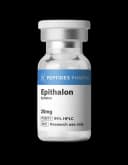
Buy Epithalon research vials from Peptides Pharma to investigate these longevity pathways with pharmaceutical-grade compound. All Epithalon UK orders include full COA documentation.
RECOMMENDED PRODUCT

Epithalon Molecular Profile
- Full Name: Epithalon / Epitalon / Epithalone - Sequence: Ala-Glu-Asp-Gly (AEDG) - Molecular Formula: C₁₄H₂₂N₄O₉ - Molecular Weight: 390.35 g/mol - Classification: Synthetic tetrapeptide bioregulator - Half-life: Approximately 2-3 hours - Origin: Synthetic analogue of pineal gland extract Epithalamin - Developer: Prof. Vladimir Khavinson, St. Petersburg Institute of Bioregulation
Epithalon's small size (only 4 amino acids) contributes to its excellent stability and bioavailability. The peptide is resistant to rapid proteolytic degradation compared to larger peptides, and its stability in lyophilised form exceeds 24 months at 2-8°C.
Peptides Pharma Epithalon vials are synthesised to >99% HPLC purity with independent mass spectrometry verification and full Certificate of Analysis included with every order.
Research Protocols and Administration
Epithalon research protocols in the published literature typically follow a cyclical dosing pattern rather than continuous administration. The most commonly cited protocol uses 5-10 mg per day administered subcutaneously for 10-20 consecutive days, followed by a 4-6 month interval before repeating the cycle.
This cyclical approach mirrors the original Epithalamin protocols developed by Khavinson's group and is based on the observation that Epithalon's effects on gene expression persist well beyond the period of active administration. Telomerase activation and melatonin normalisation appear to be sustained for months after a treatment cycle, suggesting that the peptide triggers lasting epigenetic changes rather than simply providing a transient pharmacological effect.
For researchers investigating telomere biology, baseline telomere length measurement (via qPCR or flow-FISH) before and after an Epithalon cycle provides the most direct assessment of efficacy. Melatonin researchers typically monitor urinary 6-sulfatoxymelatonin or salivary melatonin profiles to document circadian rhythm changes.
Epithalon is commonly included in comprehensive anti-aging research protocols alongside NAD+ (for sirtuin activation and mitochondrial function), GHK-Cu (for extracellular matrix remodelling), and humanin (for mitochondrial cytoprotection). These compounds address different hallmarks of aging and are mechanistically non-overlapping.
Buying Epithalon: Purity and Quality Standards
Epithalon's short sequence (only 4 amino acids) means synthesis is relatively straightforward, but purity remains critical. Common impurities include deletion sequences, racemised amino acids, and residual coupling reagents from solid-phase synthesis. Only peptide suppliers providing HPLC and mass spectrometry data can guarantee the correct sequence and stereochemistry.
Peptides Pharma Epithalon is manufactured in GMP-certified facilities using Fmoc solid-phase peptide synthesis. Each batch undergoes reverse-phase HPLC purification to >99% purity, with molecular identity confirmed by electrospray ionisation mass spectrometry (ESI-MS).
All Epithalon vials are sterile-filtered through 0.22μm membranes, lyophilised under aseptic conditions, and sealed under nitrogen atmosphere to prevent oxidative degradation. Storage at 2-8°C ensures a minimum 24-month shelf life.
Buy Epithalon UK and worldwide from Peptides Pharma with confidence. Every order ships with cold-chain packaging, full Certificate of Analysis, and research support documentation. Worldwide delivery is available with tracking on all shipments.