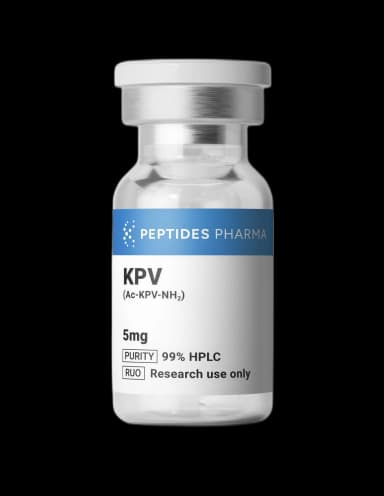
KPV is a C-terminal tripeptide fragment of alpha-melanocyte stimulating hormone (alpha-MSH) with potent anti-inflammatory, antimicrobial, and NF-kB inhibitory properties for inflammation research.
10 min read · Updated 2026-04-03
What Is KPV Peptide?
KPV is a naturally occurring tripeptide consisting of the amino acids Lys-Pro-Val (Lysine-Proline-Valine). It corresponds to the C-terminal fragment (residues 11-13) of alpha-melanocyte stimulating hormone (alpha-MSH), a 13-amino acid neuropeptide produced by the post-translational processing of proopiomelanocortin (POMC) in the hypothalamus, skin, and immune cells.
While alpha-MSH mediates its melanogenic effects through melanocortin receptors (MC1R-MC5R), the anti-inflammatory activity resides primarily in the C-terminal KPV sequence. This was a landmark discovery by Anna Catania and James Lipton in the 1990s: they demonstrated that the tripeptide KPV retained the full anti-inflammatory potency of intact alpha-MSH without melanogenic, steroidogenic, or other melanocortin receptor-mediated effects.
KPV's anti-inflammatory mechanism operates through direct inhibition of the NF-kB (Nuclear Factor kappa-light-chain-enhancer of activated B cells) signalling pathway — the master transcriptional regulator of inflammatory gene expression. By entering cells and interfering with NF-kB nuclear translocation, KPV suppresses the production of pro-inflammatory cytokines including TNF-alpha, IL-1beta, IL-6, and IL-8.
The peptide has attracted significant research interest for inflammatory bowel disease (IBD), wound healing, skin inflammation, and antimicrobial defence, representing one of the most versatile anti-inflammatory peptides in current research.
NF-kB Inhibition: The Central Anti-Inflammatory Mechanism
NF-kB is the master transcription factor controlling inflammatory gene expression. Under basal conditions, NF-kB is sequestered in the cytoplasm by inhibitory IkB proteins. Pro-inflammatory stimuli — such as TNF-alpha, IL-1, LPS, or oxidative stress — activate IKK (IkB kinase), which phosphorylates and degrades IkB, freeing NF-kB to translocate into the nucleus and activate hundreds of inflammatory genes.
Research indicates that KPV inhibits NF-kB signalling at multiple levels. Studies demonstrate that KPV enters cells through a non-receptor-mediated, peptide-transporter-dependent mechanism and directly interferes with IKK activity and NF-kB nuclear translocation. This intracellular mechanism is fundamentally different from melanocortin receptor signalling and explains why KPV retains anti-inflammatory activity despite lacking affinity for MC receptors.
The consequences of NF-kB inhibition are broad. KPV-treated inflammatory cells show reduced production of TNF-alpha, IL-1beta, IL-6, IL-8, COX-2, iNOS, and matrix metalloproteinases. These are the core mediators of tissue damage in inflammatory conditions ranging from IBD to rheumatoid arthritis to sepsis.
Importantly, KPV's NF-kB inhibition appears to be modulatory rather than absolute — reducing excessive inflammatory signalling without completely ablating the immune response. This nuanced immunomodulation makes KPV particularly attractive compared to broad immunosuppressants that impair host defence. Research suggests KPV preserves antimicrobial immune function while dampening pathological inflammation.
RECOMMENDED PRODUCT
Inflammatory Bowel Disease (IBD) Research
KPV has generated particular research interest in inflammatory bowel disease — encompassing both Crohn's disease and ulcerative colitis. Multiple preclinical studies have demonstrated significant anti-inflammatory effects in experimental colitis models.
In the DSS (dextran sodium sulphate) colitis model, oral and colonic administration of KPV significantly reduced disease activity scores, colonic inflammation, mucosal damage, and pro-inflammatory cytokine production. The peptide preserved intestinal epithelial barrier function and reduced neutrophil infiltration into colonic tissue.
A landmark study published in the Proceedings of the National Academy of Sciences demonstrated that KPV, when incorporated into nanoparticles targeted to inflamed colonic epithelium, dramatically reduced colitis severity in mice. The nanoparticle delivery system enhanced local drug concentration while minimising systemic exposure, representing a potential translation strategy for clinical IBD treatment.
KPV's mechanism in IBD appears to involve both anti-inflammatory and barrier-protective effects. The peptide reduces inflammatory cytokine production by lamina propria immune cells while simultaneously supporting tight junction protein expression in intestinal epithelial cells. This dual action addresses both the immune dysregulation and epithelial barrier failure that characterise IBD.
Researchers investigating gut inflammation can buy KPV research vials from Peptides Pharma alongside BPC-157 (which promotes mucosal healing through growth factor modulation) for comprehensive gastrointestinal research protocols.
Antimicrobial and Wound Healing Properties
Beyond its anti-inflammatory effects, KPV demonstrates direct antimicrobial activity against a range of pathogenic organisms. This dual anti-inflammatory and antimicrobial profile is shared with alpha-MSH and reflects the evolutionary origins of melanocortin peptides in innate immune defence.
Studies indicate that KPV possesses candidacidal (anti-Candida) activity, inhibiting the growth of Candida albicans at concentrations comparable to established antifungal agents. The antimicrobial mechanism involves membrane disruption — KPV's cationic character allows it to interact with negatively charged microbial membranes, causing permeabilisation and cell death.
KPV also inhibits Staphylococcus aureus biofilm formation, a finding with implications for wound healing and medical device-associated infections. Biofilm disruption combined with anti-inflammatory activity creates a particularly favourable environment for wound resolution.
In wound healing research, KPV accelerates re-epithelialisation and reduces inflammatory cell infiltration at wound sites. The mechanism involves both NF-kB-mediated suppression of excessive wound inflammation and direct promotion of keratinocyte migration. Studies in skin explant models demonstrate improved wound closure rates with topical KPV application.
The combination of anti-inflammatory, antimicrobial, and wound-healing properties makes KPV a uniquely versatile peptide for dermatological research. Peptides Pharma KPV vials are manufactured to >99% purity for researchers investigating these diverse applications.
RECOMMENDED PRODUCT
KPV Molecular Profile
- Full Name: KPV (Lys-Pro-Val) - Sequence: Lys-Pro-Val - Molecular Formula: C₁₆H₃₀N₄O₄ - Molecular Weight: 342.43 g/mol - Classification: Tripeptide, alpha-MSH C-terminal fragment - Parent Peptide: Alpha-MSH (residues 11-13) - Mechanism: NF-kB inhibition (non-melanocortin receptor) - Half-life: Relatively short; frequently formulated in nanoparticles for extended activity
KPV's small size (only 3 amino acids) gives it excellent tissue penetration and oral bioavailability compared to larger peptides. The peptide enters cells through PepT1 and PepT2 peptide transporters, which are highly expressed on intestinal epithelial cells — a property that supports oral delivery for gut inflammation research.
Peptides Pharma KPV is manufactured in GMP-certified facilities with >99% HPLC purity and independent mass spectrometry verification. Each vial includes a full Certificate of Analysis.
KPV Research Protocols and Complementary Compounds
Published KPV research protocols employ multiple routes of administration depending on the research question. Subcutaneous injection is the most common systemic route, with doses in the microgram-per-kilogram range reported in preclinical literature.
For gastrointestinal research, oral administration is often preferred due to KPV's peptide transporter-mediated uptake in intestinal epithelium. Some researchers use rectal or colonic instillation for direct delivery to inflamed tissue in colitis models.
Topical application is used in dermatological research, with KPV incorporated into creams, hydrogels, or nanoparticle formulations for wound healing and skin inflammation studies.
KPV pairs effectively with several complementary research peptides. BPC-157 promotes mucosal healing through VEGF and growth factor modulation, providing tissue repair mechanisms that complement KPV's anti-inflammatory action. TB-500 (Thymosin Beta-4) supports tissue remodelling and cellular migration. GHK-Cu provides extracellular matrix support and additional anti-inflammatory signalling through its own NF-kB modulatory effects.
For comprehensive inflammation research protocols, Peptides Pharma offers KPV alongside BPC-157, TB-500, and GHK-Cu — all manufactured to >99% purity with full COA documentation. Buy KPV UK and worldwide from peptidespharma.com with cold-chain delivery.