Everything Brazilian researchers need to know about ordering Peptides Pharma peptides. Delivery times to major Brazilian cities, ANVISA regulatory framework, customs process, BRL pricing, and payment methods including PIX.
7 min read · Updated 2026-03-31
ANVISA Regulations and Research Peptides in Brazil
Brazil regulates pharmaceutical products through the Agência Nacional de Vigilância Sanitária (ANVISA) — the National Health Surveillance Agency — operating under the Ministry of Health (Ministério da Saúde). ANVISA is responsible for the registration, inspection, and market oversight of medicines, health products, and controlled substances in Brazil.
The primary legislative framework includes Lei nº 6.360/1976 (which governs health surveillance of medicines and related products) and the RDC (Resolução da Diretoria Colegiada) resolutions that implement detailed regulatory requirements. Under Brazilian law, a product is classified as a medicamento (medicine) if it is intended for diagnosis, treatment, prevention, or cure of diseases in humans.
Research peptides sold explicitly for scientific investigation and laboratory use — not for therapeutic application, medical treatment, or human consumption — occupy a distinct regulatory category. Brazilian research institutions routinely import chemical reagents, biological compounds, and research materials for academic and industrial purposes under established import frameworks.
Brazil has a robust and expanding biomedical research sector. The Universidade de São Paulo (USP), Universidade Estadual de Campinas (UNICAMP), Universidade Federal do Rio de Janeiro (UFRJ), Fundação Oswaldo Cruz (Fiocruz), and the Instituto Butantan are among the leading institutions conducting peptide research in Brazil. The country has invested heavily in biotechnology through programmes like the Programa Nacional de Plataformas do Conhecimento (PNPC) and FAPESP (Fundação de Amparo à Pesquisa do Estado de São Paulo) research grants.
Peptides Pharma supplies all peptide products to Brazil strictly for research purposes, with clear research-use-only labelling (Apenas para fins de pesquisa) and comprehensive documentation suitable for Brazilian institutional import procedures.
What Peptides Can Brazilian Researchers Order?
Brazilian researchers can order the full range of Peptides Pharma research peptides for laboratory and scientific use. The following compounds are available:
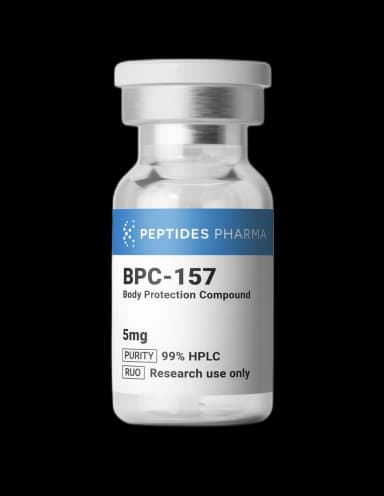
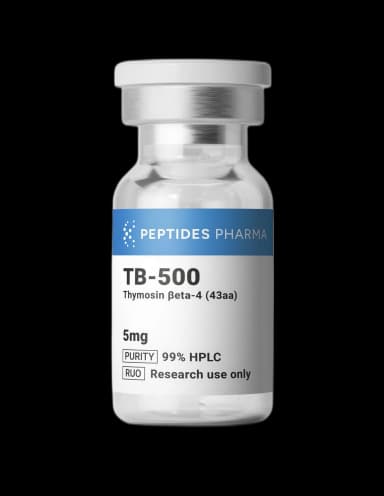
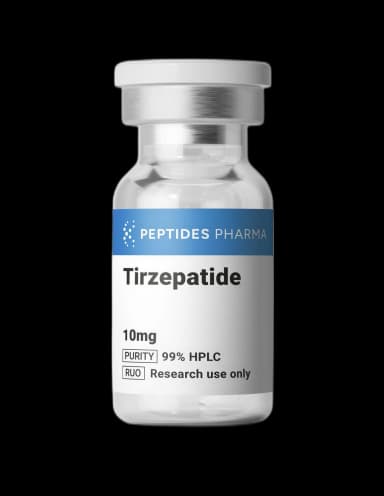
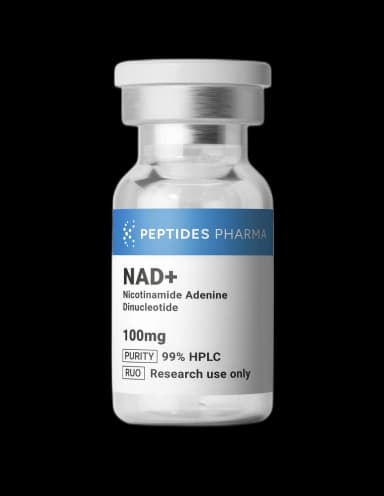
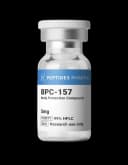
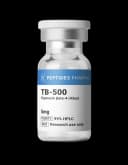
- BPC-157 — A pentadecapeptide studied extensively for tissue repair, gastric protection, and anti-inflammatory mechanisms. Brazilian university research groups in molecular medicine and pharmacology have investigated BPC-157 in preclinical models. - TB-500 — Thymosin Beta-4 fragment, a 43-amino acid peptide researched in wound healing, cell migration, and tissue remodelling. Available for research purchase by Brazilian institutions. - Tirzepatide — A dual GIP/GLP-1 receptor agonist at the forefront of metabolic and obesity research. With Brazil's growing interest in tratamento da obesidade (obesity treatment) research, tirzepatide is one of the most requested compounds. - NAD+ (Nicotinamide Adenine Dinucleotide) — A coenzyme critical for cellular energy metabolism, studied in ageing and neurodegeneration research at Brazilian institutions. - CJC-1295 — A growth hormone-releasing hormone analogue used in endocrine and metabolic research protocols. - Ipamorelin — A selective growth hormone secretagogue with high specificity, used in metabolic research. - GHK-Cu — A copper-binding tripeptide studied in dermatology and wound healing. Brazilian dermatology research groups have explored copper peptide mechanisms. - Glutathione — The principal intracellular antioxidant, studied in oxidative stress and hepatoprotection research.
All Peptides Pharma peptides are supplied with >99% purity verified via HPLC and mass spectrometry, with batch-specific Certificates of Analysis suitable for Brazilian institutional documentation requirements.
Brazil's semaglutide market is one of the largest in Latin America, with significant research interest in GLP-1 receptor agonists and related peptides. Peptides Pharma's tirzepatide vial — the next generation dual GIP/GLP-1 agonist — is particularly popular among Brazilian metabolic researchers.
RECOMMENDED PRODUCT
Shipping to Brazil: Delivery Times and Process
Peptides Pharma ships to all Brazilian addresses via established international logistics networks with full tracking capability. Deliveries to Brazil are international shipments that undergo standard Brazilian customs processing.
Estimated delivery times to major Brazilian cities:
- São Paulo (SP) — 7-10 business days - Rio de Janeiro (RJ) — 7-10 business days - Brasília (DF) — 8-12 business days - Belo Horizonte (MG) — 8-12 business days - Curitiba (PR) — 8-12 business days - Porto Alegre (RS) — 8-12 business days - Salvador (BA) — 9-12 business days - Recife (PE) — 9-12 business days - Fortaleza (CE) — 9-12 business days - Manaus (AM) — 10-14 business days
All orders are processed and dispatched within one business day of confirmation. Full tracking information is sent via email, allowing researchers to monitor shipment progress from European dispatch through Brazilian customs clearance (desembaraço aduaneiro) to final delivery.
Peptides Pharma ships to both residential addresses and institutional addresses, including university campuses, research laboratories, Fiocruz facilities, and corporate R&D sites. For deliveries to Brazilian institutions requiring reception at specific departments, researchers can include delivery instructions during checkout.
Shipments to Brazil are handled with temperature-controlled packaging to maintain peptide integrity during transit, which is particularly important for deliveries to tropical climate regions.
Brazilian Customs and Import Process
International shipments to Brazil pass through Receita Federal (Brazilian Federal Revenue Service) customs inspection. Understanding this process helps researchers plan their orders effectively.
Import duty (Imposto de Importação): Brazil applies import duties on international purchases. Research materials imported by registered research institutions may qualify for duty exemptions or reductions under specific import regimes (ex-tarifário, drawback, or institutional import frameworks). Individual researchers should check with their institution's procurement department (departamento de compras) about available import facilitations.
ICMS (Imposto sobre Circulação de Mercadorias e Serviços): This state-level tax applies to imported goods and varies by state (7-18%). The rate depends on the destination state and product classification.
Simplified customs for low-value shipments: Brazil has implemented Remessa Conforme for participating international sellers, which streamlines customs processing. Peptides Pharma's shipments are documented with complete commercial invoices, product descriptions, and value declarations to facilitate smooth customs clearance.
Documentation provided by Peptides Pharma: Every shipment to Brazil includes a detailed commercial invoice (fatura comercial), packing list, product description with CAS numbers, Certificates of Analysis, and research-use-only declarations. This documentation is designed to support customs clearance and institutional import procedures.
Institutional import advantages: Brazilian universities and research institutions registered with CNPq (Conselho Nacional de Desenvolvimento Científico e Tecnológico) or funded by agencies like FAPESP, CAPES, or FINEP often have established import channels and may qualify for tax exemptions on research materials under Decree 6.262/2007.
Tracking through customs: Peptides Pharma provides full tracking that continues through Brazilian customs processing. Researchers can monitor their shipment status through both Peptides Pharma's tracking system and Correios (Brazilian postal service) or the courier's tracking platform.
RECOMMENDED PRODUCT
Pricing in BRL and Payment Methods
Peptides Pharma now offers pricing in Brazilian Real (R$), providing price transparency and eliminating exchange rate surprises for Brazilian researchers.
BRL pricing: All Peptides Pharma products display prices in R$ on the Brazilian locale of the website. Researchers see the exact amount they will be charged — no hidden currency conversion fees, no exchange rate uncertainty. Research vials start from approximately R$ 550 (equivalent to €99).
Accepted payment methods: Peptides Pharma accepts international credit and debit cards (Visa, Mastercard, American Express) from Brazilian banks. Major Brazilian banks including Itaú, Bradesco, Banco do Brasil, Santander Brasil, and Nubank cards are all accepted.
PIX considerations: While Peptides Pharma's payment system primarily processes international card payments, Brazilian researchers using digital banks (Nubank, Inter, C6 Bank) can use their international debit cards for purchases. Peptides Pharma is evaluating direct PIX integration for future convenience.
Institutional procurement: Brazilian research institutions can contact Peptides Pharma for bulk pricing, institutional invoicing, and formal quotations (cotação) suitable for procurement processes (licitação or compra direta). Peptides Pharma provides proforma invoices and documentation compatible with Brazilian institutional purchasing requirements.
Free shipping threshold: Free shipping is available on orders over €175 (approximately R$ 830). Given that a single Peptides Pharma research vial starts at R$ 550, most two-vial orders qualify for free international shipping to Brazil.
Currency and value: Peptides Pharma's Swiss manufacturing base and competitive EUR pricing translate to strong value in Brazilian Real. Compared to domestic Brazilian peptide suppliers or US-based alternatives, Peptides Pharma offers pharmaceutical-grade quality (>99% purity, GMP-certified) at competitive international pricing, with the added advantage of pre-filled vial delivery format that eliminates reconstitution requirements.