
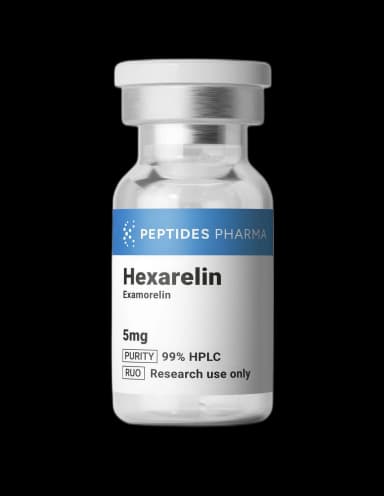
How Hexarelin Produces Maximum GH Release
Hexarelin (Examorelin) is a synthetic hexapeptide growth hormone secretagogue that binds the ghrelin receptor (GHS-R1a) with high affinity. It is considered the most potent GH-releasing peptide in its class:
Maximum GH Output: Studies demonstrate Hexarelin produces the largest acute GH pulse of any GHRP-class compound, exceeding GHRP-6, GHRP-2, and Ipamorelin in head-to-head comparisons. Peak GH levels can reach 2-3 times those achieved with other GHRPs.
Cardioprotective Effects: Research suggests Hexarelin has GH-independent cardioprotective properties, mediated through cardiac GHS receptors (CD36). Studies in ischaemia-reperfusion models show reduced infarct size and improved cardiac function.
Desensitisation Concern: A significant limitation of Hexarelin is receptor desensitisation with chronic use. Research shows progressive attenuation of GH response over 4-16 weeks of continuous dosing, which must be considered in protocol design.
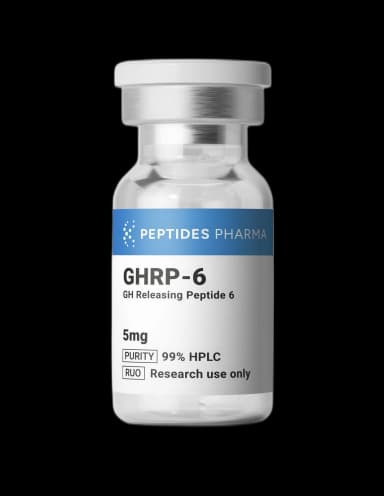
How GHRP-6 Combines GH Release with Appetite Stimulation
GHRP-6 (Growth Hormone Releasing Peptide-6) is one of the earliest synthetic GH secretagogues, first described in the 1980s. It remains widely used in research due to its well-characterised pharmacology:
Robust GH Release: GHRP-6 produces strong, reliable GH pulses through ghrelin receptor activation. While slightly less potent than Hexarelin, it maintains more consistent efficacy over extended dosing periods with less receptor desensitisation.
Appetite Stimulation: GHRP-6 significantly increases appetite through ghrelin pathway activation. This effect is dose-dependent and may be beneficial in research models studying anorexia, cachexia, or appetite regulation — or undesirable when GH release without appetite effects is required.
Gastric Motility: Research indicates GHRP-6 increases gastric acid secretion and gut motility, consistent with its ghrelin-mimetic activity. This makes it relevant for gastrointestinal motility research beyond its GH-releasing properties.
Choosing Between Maximum Potency and Sustained Efficacy
The choice between Hexarelin and GHRP-6 involves a trade-off between acute potency and chronic utility:
Hexarelin advantages: Maximum acute GH release, cardioprotective properties, minimal appetite effects. Ideal for short-term protocols or research requiring the highest possible GH pulse.
Hexarelin limitations: Significant receptor desensitisation with chronic use, effects on cortisol and prolactin, not suitable for extended continuous protocols.
GHRP-6 advantages: Robust and sustained GH release, less desensitisation, well-characterised pharmacology over decades of research. Appetite stimulation is beneficial in cachexia and anorexia models.
GHRP-6 limitations: Strong appetite effects may confound some research designs, gastric motility effects, less GH release per dose than Hexarelin.
Both compounds are available as lyophilized vials from Peptides Pharma, reconstituted with bacteriostatic water for subcutaneous administration.
Which Should You Choose?
Choose Hexarelin if your primary research focus is: - Maximum acute GH release for short-term protocols - Cardioprotection and cardiac GHS receptor biology - GH secretagogue potency comparison studies - Research not requiring extended continuous dosing
Choose GHRP-6 if your primary research focus is: - Sustained GH release over extended protocols - Appetite stimulation and ghrelin pathway research - Cachexia, anorexia, or appetite regulation models - Well-characterised pharmacology with decades of reference data - Gastric motility and gastrointestinal function research
Consider Ipamorelin instead if: - You need selective GH release without cortisol, prolactin, or appetite effects - Clean GH isolation is critical for your research design - Extended dosing without desensitisation is required

