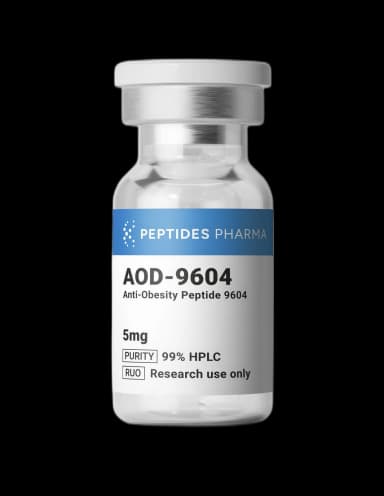
AOD-9604 is a modified fragment of human growth hormone (hGH 176-191) studied for its lipolytic activity without the diabetogenic or growth-promoting effects of full-length GH.
10 min read · Updated 2026-04-03
What Is AOD-9604?
AOD-9604, also known as the Anti-Obesity Drug 9604, is a synthetic peptide fragment corresponding to amino acids 176-191 of human growth hormone (hGH). Originally developed by Monash University in Australia, this modified hGH fragment was designed to isolate the fat-metabolising region of growth hormone without triggering the growth-promoting or diabetogenic effects associated with full-length GH administration.
The peptide retains a disulphide bond between Cys-182 and Cys-189, which is critical for its three-dimensional structure and biological activity. Research suggests that AOD-9604 stimulates lipolysis — the breakdown of stored triglycerides into free fatty acids and glycerol — while simultaneously inhibiting lipogenesis, the formation of new fat.
Unlike full-length hGH, AOD-9604 does not compete for the GH receptor and does not stimulate IGF-1 production at physiological doses. This makes it a uniquely targeted compound for weight management research, free from the metabolic complications that limit the utility of exogenous GH in obesity studies.
AOD-9604 has been granted GRAS (Generally Recognized as Safe) status by the US FDA for use as a food supplement ingredient, reflecting its favourable safety profile in human studies.
Mechanism of Action: How AOD-9604 Drives Lipolysis
The lipolytic mechanism of AOD-9604 research centres on the beta-3 adrenergic receptor pathway. Studies indicate that AOD-9604 enhances the phosphorylation of hormone-sensitive lipase (HSL), the rate-limiting enzyme in triglyceride breakdown. By upregulating HSL activity, the peptide accelerates the release of stored fatty acids from adipocytes, making them available for beta-oxidation and energy production.
Research also suggests that AOD-9604 inhibits lipogenesis through modulation of acetyl-CoA carboxylase (ACC), the enzyme responsible for the first committed step in fatty acid synthesis. This dual action — promoting fat breakdown while preventing fat formation — distinguishes AOD-9604 from most other weight management compounds that typically address only one side of the equation.
Importantly, AOD-9604 appears to exert tissue-selective effects. Preclinical studies demonstrate preferential activity on visceral and subcutaneous adipose tissue, with minimal impact on muscle mass or organ weight. This selectivity aligns with the original design intent of isolating the lipolytic domain of hGH.
The peptide's mechanism does not involve modification of blood glucose, insulin sensitivity, or IGF-1 levels, which has been confirmed across multiple clinical studies. This is a critical distinction from full-length GH, which can induce insulin resistance and promote acromegalic changes at supraphysiological doses.
RECOMMENDED PRODUCT
Key Research Findings and Clinical Data
AOD-9604 has been evaluated in multiple preclinical and clinical studies spanning over two decades. Early animal research at Monash University demonstrated that the peptide reduced body fat in obese Zucker rats without affecting food intake or lean body mass, establishing its lipolytic specificity.
A Phase 2b clinical trial involving 300 obese subjects over 12 weeks reported statistically significant weight loss in the AOD-9604 treatment groups compared to placebo. The highest dose group (1 mg/day oral) showed mean weight reductions that, while modest, achieved statistical significance without adverse metabolic changes.
Subsequent studies explored cartilage regeneration as an additional therapeutic avenue. Research published in the Journal of Molecular Endocrinology demonstrated that AOD-9604 stimulates proteoglycan synthesis and promotes chondrocyte proliferation, suggesting potential applications in osteoarthritis research. An intra-articular formulation has been investigated in Phase 2 clinical trials for knee osteoarthritis.
Safety data across all human trials has been consistently favourable. No treatment-related serious adverse events were reported, and metabolic parameters including fasting glucose, insulin, HbA1c, and IGF-1 remained within normal ranges throughout all study durations.
AOD-9604 Molecular Profile and Specifications
- Full Name: Anti-Obesity Drug 9604 / hGH Fragment 176-191 - Molecular Formula: C₇₈H₁₂₃N₂₃O₂₃S₂ - Molecular Weight: 1,815.08 g/mol - Sequence: Tyr-Leu-Arg-Ile-Val-Gln-Cys-Arg-Ser-Val-Glu-Gly-Ser-Cys-Gly-Phe - Classification: Modified hGH fragment peptide - Half-life: Approximately 30-60 minutes (subcutaneous) - Disulphide Bond: Cys-182 to Cys-189 - FDA Status: GRAS designation for food supplement use
AOD-9604's relatively short half-life necessitates daily administration in most research protocols. The peptide is stable in lyophilised form for 24 months at 2-8°C, and for 30 days after reconstitution with bacteriostatic water when refrigerated.
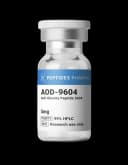
Peptides Pharma AOD-9604 vials are manufactured in GMP-certified facilities with >99% HPLC purity confirmed by independent mass spectrometry analysis. Each batch ships with a full Certificate of Analysis.
RECOMMENDED PRODUCT
AOD-9604 Research Protocols and Dosing
Published research protocols for AOD-9604 typically employ subcutaneous injection as the primary route of administration, although oral bioavailability has been explored in clinical trials. The following dosing ranges have been reported across the peer-reviewed literature.
For body composition research, most protocols use 250-500 mcg per day administered subcutaneously on an empty stomach. The fasted state is considered important because insulin levels can interfere with the lipolytic signalling cascade that AOD-9604 initiates. Morning administration, at least 30 minutes before food, is the most commonly cited protocol.
Research protocols investigating AOD-9604 for cartilage repair use significantly higher doses, typically in the milligram range, delivered via intra-articular injection. These protocols are supervised by clinical researchers and fall outside the scope of standard peptide research.
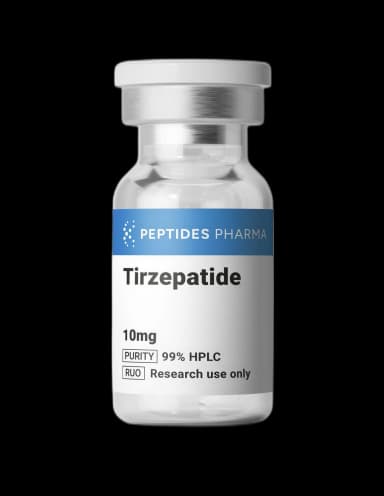
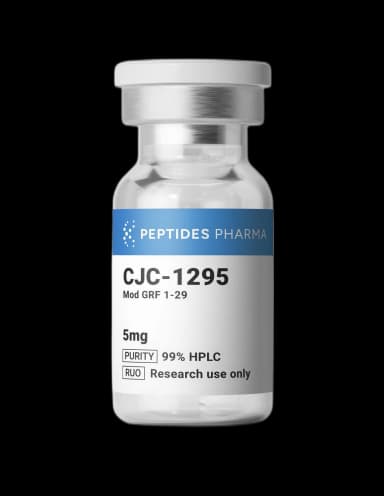
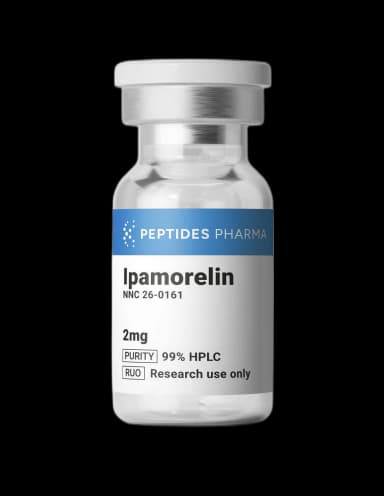
For comprehensive metabolic research, AOD-9604 is frequently combined with other compounds. CJC-1295 and ipamorelin are common adjuncts, as GH secretagogues may enhance the lipolytic environment without the contraindicated effects of exogenous GH. Tirzepatide has emerged as another complementary compound for researchers studying multi-pathway approaches to metabolic regulation.
Protocol duration in published studies ranges from 4 to 12 weeks, with most body composition research using 8-12 week timelines to capture meaningful changes in fat mass and metabolic markers.
AOD-9604 vs Other Weight Management Peptides
The weight management peptide landscape has expanded significantly, and researchers now have multiple options with distinct mechanisms. Understanding how AOD-9604 compares helps inform protocol design.
AOD-9604 vs Tirzepatide: Tirzepatide acts as a dual GIP/GLP-1 receptor agonist, reducing appetite and slowing gastric emptying centrally. AOD-9604 works peripherally on adipose tissue to promote lipolysis. These non-overlapping mechanisms make them potentially complementary rather than competitive.
AOD-9604 vs hGH: Full-length growth hormone has potent lipolytic effects but also promotes IGF-1-mediated growth, fluid retention, and insulin resistance. AOD-9604 isolates the lipolytic action without these side effects, making it more suitable for long-term metabolic research.
AOD-9604 vs CJC-1295/Ipamorelin: GH secretagogues work upstream by stimulating endogenous GH release. AOD-9604 works downstream, directly acting on adipose tissue. Combining secretagogues with AOD-9604 may provide synergistic effects by enhancing both GH-mediated and direct lipolytic pathways.
Buy AOD-9604 research vials from Peptides Pharma for protocols requiring pharmaceutical-grade purity. All AOD-9604 vials ship with COA documentation and worldwide cold-chain delivery.
Buying AOD-9604: Quality and Sourcing Considerations
When sourcing AOD-9604 for research, purity is paramount. The disulphide bond between Cys-182 and Cys-189 is essential for biological activity, and improperly synthesised peptide with incorrect disulphide bridging will be inactive. HPLC purity alone does not guarantee correct folding — mass spectrometry confirmation is required.
Peptides Pharma AOD-9604 vials exceed industry standards with >99% HPLC purity and full mass spectrometry verification of the correct molecular weight and disulphide bridge formation. Manufacturing takes place in GMP-certified facilities with 0.22μm sterile filtration.
Storage requirements for AOD-9604 are standard for peptide research. Lyophilised vials should be stored at 2-8°C and protected from light. After reconstitution with bacteriostatic water, the solution remains stable for approximately 30 days at 2-8°C. Avoid repeated freeze-thaw cycles.
Peptides Pharma ships AOD-9604 UK and worldwide with cold-chain packaging, ensuring peptide integrity throughout transit. Each order includes a Certificate of Analysis, reconstitution guidance, and access to research support documentation.