

How to Reconstitute Peptide Vials: Step-by-Step Guide
5 min read
Skin ageing occurs through two converging processes: intrinsic chronological ageing driven by declining collagen synthesis and cellular turnover, and extrinsic damage from UV exposure, oxidative stress, and environmental factors. GHK-Cu and Glutathione address both dimensions at the cellular level — not through surface-level cosmetic effects, but through fundamental changes in gene expression, collagen architecture, and redox balance. Research positions these compounds as clinical-grade interventions that operate beneath the cosmetic layer, at the biology that determines skin structure and resilience.
4,000+
GENES INFLUENCED BY GHK-CU
70%
COLLAGEN DECLINE BETWEEN AGES 25-80
>99%
PURITY (BOTH COMPOUNDS)
32+
PUBLISHED SKIN-SPECIFIC GHK-CU STUDIES
Entendendo o mecanismo de ação por trás da pesquisa
GHK-Cu has been shown in research to upregulate genes responsible for collagen I, collagen III, and elastin production. Studies indicate it simultaneously increases decorin and glycosaminoglycan synthesis — the structural matrix that organises collagen fibres. This gene-level activation goes beyond surface hydration, potentially rebuilding the dermal architecture that provides skin with its structural integrity and youthful firmness.
Matrix metalloproteinases (MMPs) are enzymes that break down collagen and elastin — their overactivity is a primary driver of skin ageing. Research suggests GHK-Cu may upregulate tissue inhibitors of metalloproteinases (TIMPs), effectively rebalancing the construction-to-destruction ratio in the extracellular matrix. Studies indicate this protective mechanism may slow the degradation of existing collagen while new synthesis proceeds.
Glutathione is studied extensively for its role in melanin regulation. Research indicates it may shift melanin production from eumelanin (dark pigment) toward pheomelanin (lighter pigment) by inhibiting tyrosinase activity. Studies also suggest glutathione may reduce existing hyperpigmentation through its antioxidant action on melanocyte oxidative stress — a mechanism distinct from conventional brightening agents.
Skin is the body's most environmentally exposed organ, subject to continuous oxidative assault from UV radiation, pollution, and metabolic byproducts. Glutathione directly neutralises reactive oxygen species and regenerates other antioxidants including vitamins C and E. Research suggests maintaining dermal glutathione levels may protect against photoaging, reduce inflammation, and support the skin's intrinsic repair mechanisms.
Research shows GHK-Cu upregulates collagen type I and III synthesis at the gene expression level — the primary structural proteins responsible for skin tensile strength and elasticity. Unlike topical retinoids that work primarily at the epidermal layer, subcutaneous GHK-Cu delivery may influence deeper dermal remodelling where structural ageing originates.
Acts at the dermal level where 80% of skin structure resides
Glutathione's effect on skin pigmentation is one of its most-studied dermatological applications. Research suggests subcutaneous delivery may provide more consistent melanin modulation than topical or oral routes. Studies indicate glutathione may reduce hyperpigmentation, even skin tone, and promote a more luminous complexion through tyrosinase inhibition and oxidative stress reduction in melanocytes.
Subcutaneous route bypasses the absorption limitations of oral glutathione
GHK-Cu has been extensively studied for its wound healing properties. Research indicates it may attract immune cells to wound sites, stimulate angiogenesis, promote nerve outgrowth, and increase antioxidant enzyme expression. Studies on scar tissue suggest GHK-Cu may promote remodelling toward normal dermal architecture rather than fibrotic scarring.
Research on GHK-Cu extends beyond skin to hair follicle biology. Studies suggest it may increase hair follicle size, stimulate hair growth, and reduce hair loss through enhanced blood supply to the follicle and modulation of follicular gene expression. The copper ion delivery appears to play a specific role in follicular cell proliferation.
UV-induced oxidative stress is the primary driver of extrinsic skin ageing. Glutathione directly neutralises UV-generated free radicals while GHK-Cu's gene expression effects include upregulation of DNA repair enzymes. Research suggests this dual mechanism may both protect against ongoing photodamage and support repair of existing UV-induced dermal changes.
Both GHK-Cu and Glutathione have documented anti-inflammatory properties relevant to skin health. GHK-Cu research shows suppression of inflammatory cytokines including IL-6 and TNF-alpha in skin tissue models. Glutathione's role in reducing oxidative stress indirectly calms inflammatory cascades. Studies suggest this combination may benefit research into inflammatory skin conditions and sensitised skin biology.
Sistemas de entrega de peptídeos de pesquisa pré-misturados e prontos para uso de qualidade premium
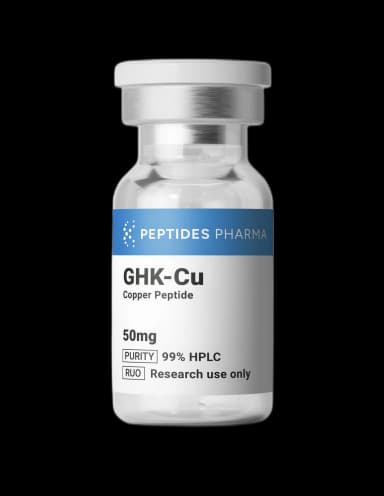
Copper Peptide
A copper-binding tripeptide investigated for its role in tissue remodelling, collagen synthesis, and gene expression modulation. Studies suggest GHK-Cu may activate regenerative processes through copper-mediated signalling.
Copper Peptide
A copper-binding tripeptide investigated for its role in tissue remodelling, collagen synthesis, and gene expression modulation. Studies suggest GHK-Cu may activate regenerative processes through copper-mediated signalling.
Pesquisadores e profissionais que trabalham nessas áreas
Investigating peptide-mediated approaches to collagen remodelling, pigmentation regulation, and dermal architecture restoration. GHK-Cu and Glutathione are among the most-cited compounds in dermatological peptide research.
Studying clinical-grade alternatives to cosmetic interventions. Research suggests peptide-driven skin remodelling may complement or provide an alternative pathway to procedures targeting collagen loss and uneven pigmentation.
Examining GHK-Cu's documented effects on wound closure, angiogenesis, and scar tissue remodelling. The peptide's ability to attract immune cells and promote organised collagen deposition makes it a significant research compound.
Studying glutathione's mechanism of action on melanin synthesis pathways, including tyrosinase inhibition and the eumelanin-to-pheomelanin ratio shift. Subcutaneous delivery provides a controlled research route with consistent bioavailability.
Why Researchers Choose Peptides Pharma Skin Peptides
Combining GHK-Cu for structural remodelling and gene expression with Glutathione for antioxidant defence and pigmentation regulation. Research protocols typically employ daily subcutaneous administration, with GHK-Cu addressing the structural and genetic components of skin biology while Glutathione provides continuous oxidative protection and melanin modulation.
DURAÇÃO
12-16 weeks
FREQUÊNCIA
Daily subcutaneous
PRODUCTS
2 peptides
5 min read
9 min read
10 min read
7 min read
GHK-Cu (copper peptide) has been shown in over 70 published studies to stimulate collagen production, promote elastin synthesis, increase glycosaminoglycans (like hyaluronic acid), and support skin's natural repair processes. It is one of the most extensively researched peptides for skin biology.
Injectable Glutathione has significantly higher bioavailability compared to oral supplements, which are largely broken down during digestion. Peptides Pharma's vial-delivered Glutathione bypasses the digestive system entirely, delivering the active compound directly for maximum research efficacy.
Yes, these peptides target complementary skin pathways — GHK-Cu promotes structural protein synthesis (collagen, elastin) while Glutathione provides antioxidant defence and melanin regulation. They are commonly studied together in skin research protocols.
Step-by-step: prime, attach needle, dial dose, inject, store. No reconstitution needed. Works with all Peptides Pharma vials. Beginner-friendly 5 min guide.
ARTICLEGHK-Cu modulates 4,000+ genes for younger skin. Collagen synthesis, wound healing, and hair growth research explained. Lyophilized vial from €139.
ARTICLENAD+ drives 500+ cell reactions and drops 50% by age 60. Sirtuin pathways, vial vs IV costs, and bioavailability compared. 2026 research guide.
COMPARISONCompare GHK-Cu and KPV for tissue repair research. Copper peptide remodelling vs anti-inflammatory signalling. Buy >99% purity research-grade peptide vials.
ENCYCLOPEDIACopper Tripeptide / Matrikine. Molecular weight: 403.92 Da. Explore mechanism of action, key studies, and research applications.
BUNDLETriple-compound protocol for cellular aging research
PROTOCOLResearch protocol combining BPC-157 and TB-500 lyophilized vials for accelerated tissue recovery. Explore synergistic healing mechanisms, dosing schedules, and published study findings.
FAQEverything you need to know about peptide vial systems. Learn how pre-mixed research vials work, their advantages over vials, dosing mechanisms, and more.
CATEGORYResearch-grade recovery research vials. BPC-157 and TB-500 for tissue repair, wound healing, and inflammation research. >99% purity, UK delivery.
CATEGORYResearch-grade weight loss research vials. Tirzepatide dual GIP/GLP-1 agonist for metabolic research. Lyophilized vials, >99% purity, worldwide delivery.
Access research-grade GHK-Cu and Glutathione — clinical peptides that work at the gene expression and cellular level to address the fundamental biology of skin structure, pigmentation, and resilience.