A beginner-friendly guide to peptide dosing for research applications. Standard protocols, timing, administration, and how Peptides Pharma research vials simplify the dosing process.
9 min read · Updated 2026-03-31
Peptide Dosing: Why It Matters for Research
Accurate, consistent dosing is the foundation of reliable peptide research. Underdosing may fail to produce measurable biological effects. Overdosing wastes material and may introduce confounding variables. Inconsistent dosing produces unreliable, irreproducible data.
For beginners, peptide dosing can seem complex — particularly when using traditional vial-and-syringe methods that require reconstitution calculations, volume measurements, and manual drawing.
This guide covers the fundamentals of peptide dosing, presents standard research protocols from published literature, and explains how Peptides Pharma's vial systems simplify the process.
Important disclaimer: Dosing information is presented from published research literature for educational reference. Peptides Pharma products are sold for research purposes only. This is not medical advice. Consult relevant literature and qualified professionals for research protocol design.
Understanding Peptide Dosing Units
Before discussing specific protocols, understanding dosing units is essential:
Micrograms (mcg or μg) Most peptide research doses are expressed in micrograms. 1 milligram (mg) = 1,000 micrograms (mcg).
Milligrams (mg) Larger peptide doses (e.g., Tirzepatide, NAD+) are expressed in milligrams.
IU (International Units) Some peptides (particularly growth hormone-related compounds) use International Units. Conversion factors vary by peptide.
Body weight-based dosing (mcg/kg) Some research protocols scale doses to body weight (e.g., 10 mcg/kg). This means a 70 kg individual would receive 700 mcg (0.7 mg).
Fixed dosing Other protocols use fixed doses regardless of body weight (e.g., 250 mcg twice daily).
Peptides Pharma vial advantage: Peptides Pharma vials use a precise dosing mechanism calibrated to deliver precise, pre-set increments. Each click delivers an exact, factory-calibrated amount — eliminating the need for complex calculations. The dosing dial and included documentation specify exact amounts per click for each peptide.
RECOMMENDED PRODUCT
Standard Research Protocols by Peptide
The following protocols are compiled from published research literature. They represent commonly studied dosing regimens, not medical recommendations:
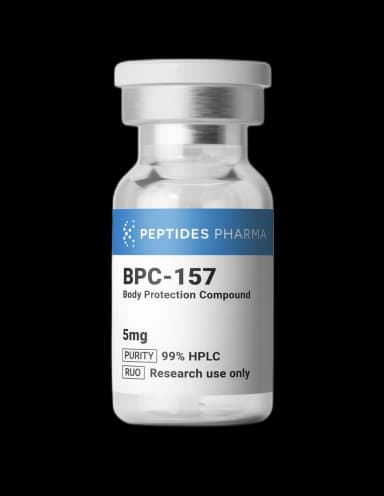
BPC-157 (Peptides Pharma Research Vial, €119) - Common research dose: 200-500 mcg/day - Frequency: Once or twice daily (split AM/PM) - Protocol duration: 2-4 weeks (acute) or 4-8 weeks (chronic models) - Administration: Subcutaneous injection - Timing: Can be taken with or without food; often proximal to injury site - Peptides Pharma vial: Pre-calibrated for 30 days of daily dosing
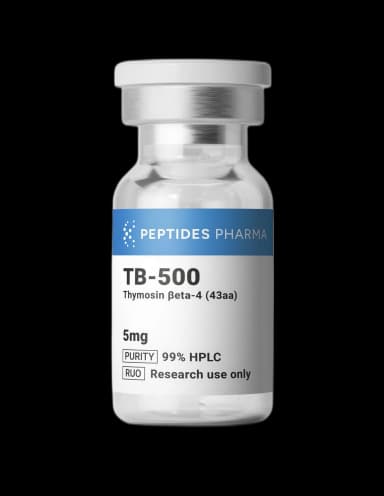
TB-500 (Peptides Pharma Research Vial, €119) - Common research dose: 250-750 mcg/day (loading) → 250-500 mcg twice weekly (maintenance) - Loading phase: First 2-4 weeks at higher frequency - Maintenance: Reduced frequency after loading period - Administration: Subcutaneous injection - Timing: Any time of day; injection site flexible (systemic distribution) - Peptides Pharma vial: Pre-calibrated for 30 days of daily dosing
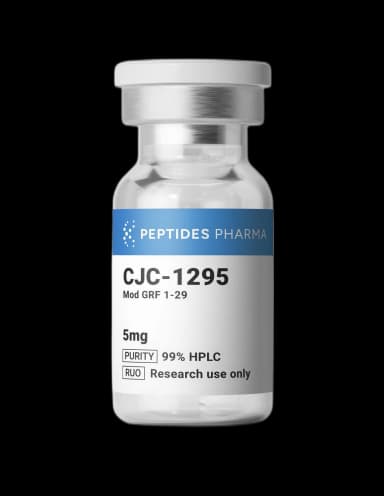
CJC-1295 (Peptides Pharma Research Vial, €109) - Common research dose: 100-300 mcg/day - Frequency: Once daily, typically evening - Protocol duration: 8-12 weeks for GH optimisation studies - Timing: 30-60 minutes before sleep, ideally fasted (2-3 hours post-meal) - Peptides Pharma vial: Pre-calibrated for 30 days of daily dosing
More Research Protocols: GH, Skin, and Metabolic Peptides
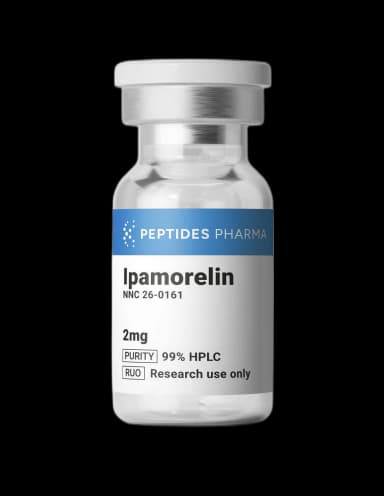
Ipamorelin (Peptides Pharma Research Vial, €109) - Common research dose: 100-300 mcg/day - Frequency: Once daily (often combined with CJC-1295) - Timing: Evening, 30-60 minutes before sleep, fasted - Stack note: Frequently co-administered with CJC-1295 at the same time - Peptides Pharma vial: Pre-calibrated for 30 days of daily dosing
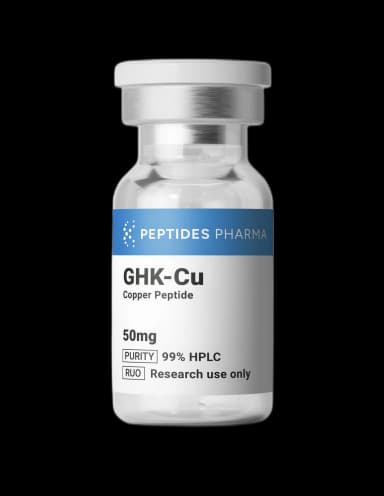
GHK-Cu (Peptides Pharma Research Vial, €139) - Common research dose: 200-600 mcg/day - Frequency: Once daily - Protocol duration: 4-8 weeks (skin/anti-ageing research) - Timing: Morning administration common - Peptides Pharma vial: Pre-calibrated for 30 days of daily dosing
Glutathione (Peptides Pharma Research Vial, €99) - Common research dose: 200-600 mg weekly (IV studies) or daily subcutaneous dosing - Frequency: Daily for subcutaneous protocols - Timing: Morning or as directed by research protocol - Peptides Pharma vial: Pre-calibrated for 30 days of daily dosing
NAD+ (Peptides Pharma Research Vial €189 / NAD+ vial €299) - Research doses vary widely: 50-500 mg IV (clinical studies) or daily subcutaneous microdosing - Frequency: Daily - Timing: Morning or early afternoon (may affect sleep if taken late) - NAD+ vial system enables precision microdosing with cartridge-based delivery
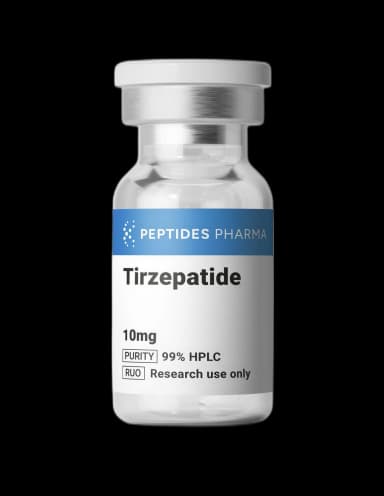
Tirzepatide (Peptides Pharma Research Vial €139 / Tirzepatide Vial €249) - Clinical trial protocol: 2.5 mg weekly → 5 mg → 7.5 mg → 10 mg → 12.5 mg → 15 mg (dose escalation every 4 weeks) - Frequency: Once weekly - Timing: Any day of the week, consistent timing - Tirzepatide Vial: Fixed 40 mg single-use dose
RECOMMENDED PRODUCT
Why Peptides Pharma Pens Simplify Dosing for Beginners
Traditional vial-based dosing requires multiple calculations:
Vial dosing steps (example: 5 mg BPC-157 vial): 1. Calculate reconstitution volume (e.g., 2 mL bacteriostatic water) 2. Calculate concentration (5 mg / 2 mL = 2.5 mg/mL = 2,500 mcg/mL) 3. Calculate injection volume for desired dose (e.g., 250 mcg = 0.1 mL) 4. Draw 0.1 mL using an insulin syringe (read tiny markings accurately) 5. Repeat daily — any error compounds
Common beginner mistakes with vials: - Using wrong volume of bacteriostatic water (wrong concentration) - Misreading syringe markings (wrong dose) - Injecting air bubbles (reduced dose) - Cross-contaminating during reconstitution - Mathematical errors in concentration calculations
Peptides Pharma vial dosing steps: 1. Remove vial from refrigerator (15 minutes before use) 2. Attach sterile needle 3. Dial dose on selector (audible clicks, clear markings) 4. Inject subcutaneously 5. Done — 90 seconds total
No calculations. No reconstitution. No syringe reading.
Each Peptides Pharma vial is factory-calibrated with <2% dosing variance. The dial mechanism delivers the same precise amount with every click, from first dose to last. For beginners, this eliminates the most common sources of dosing error and produces more reliable research data from day one.
General Dosing Best Practices
Regardless of the specific peptide, these best practices apply to all dosing protocols:
1. Start conservative Begin at the lower end of published dose ranges. Research protocols frequently use dose-escalation designs — starting low and increasing over 1-2 weeks. This allows baseline observation and identification of any sensitivity.
2. Maintain consistency Administer at the same time each day (or week for Tirzepatide). Consistent timing produces more reliable data and aligns with published protocol designs.
3. Record everything Maintain a research log documenting: - Peptide name and batch number - Dose administered (exact amount) - Time of administration - Injection site used - Any observations or notes
4. Rotate injection sites Alternate between injection sites (abdomen, outer thigh, upper arm, upper buttock) to prevent localised tissue changes. Use a rotation pattern and document each site.
5. Proper needle technique - Clean injection site with alcohol swab - Insert needle at 45-90° angle for subcutaneous injection - Inject slowly and steadily - Hold for 10 seconds before withdrawing - Apply gentle pressure with a clean swab - Never reuse needles
6. Respect the protocol duration Most peptide research protocols run for defined periods (2-8 weeks). Don't extend indefinitely without reference to published protocol designs. Peptides Pharma vials provide exactly 30 days of material, naturally defining protocol boundaries.
7. One variable at a time For beginners, start with a single peptide before attempting stacking protocols. This establishes individual baseline responses and simplifies data interpretation.