A comprehensive reference table of peptide molecular weights, amino acid sequences, and physicochemical properties for researchers. Covers all major research peptides available in 2026.
6 min read · Updated 2026-03-31
How to Calculate Peptide Molecular Weight
The molecular weight (MW) of a peptide is calculated by summing the residue weights of each amino acid in the sequence, then subtracting the mass of water molecules lost during peptide bond formation.
Formula: MW = Σ (amino acid residue masses) − (n−1) × 18.015 + 18.015
Where n is the number of amino acids. Each peptide bond formation releases one water molecule (H₂O, 18.015 Da), but the intact peptide retains one water molecule at the termini.
Average vs. Monoisotopic mass: The table below provides average molecular weights (using average isotopic abundances), which are standard for laboratory work. Monoisotopic masses (using the most abundant isotope of each element) are used in mass spectrometry and are typically 0.05–0.5 Da lower for peptides in the 500–5000 Da range.
Amino Acid Residue Masses — Quick Reference
These residue masses are used when calculating peptide molecular weight from a sequence:
| Amino Acid | 3-Letter | 1-Letter | Residue Mass (Da) | |-----------|----------|----------|-------------------| | Glycine | Gly | G | 57.021 | | Alanine | Ala | A | 71.037 | | Valine | Val | V | 99.068 | | Leucine | Leu | L | 113.084 | | Isoleucine | Ile | I | 113.084 | | Proline | Pro | P | 97.053 | | Phenylalanine | Phe | F | 147.068 | | Tryptophan | Trp | W | 186.079 | | Methionine | Met | M | 131.040 | | Serine | Ser | S | 87.032 | | Threonine | Thr | T | 101.048 | | Cysteine | Cys | C | 103.009 | | Tyrosine | Tyr | Y | 163.063 | | Histidine | His | H | 137.059 | | Lysine | Lys | K | 128.095 | | Arginine | Arg | R | 156.101 | | Aspartate | Asp | D | 115.027 | | Glutamate | Glu | E | 129.043 | | Asparagine | Asn | N | 114.043 | | Glutamine | Gln | Q | 128.059 |
For modified amino acids or non-standard residues, add the modification mass to the base residue mass.
RECOMMENDED PRODUCT
Research Peptide Molecular Weights — Complete Table
The following table covers all major research peptides available from Peptides Pharma and other suppliers in 2026. Data sourced from UniProt, PubChem, and published literature.
Peptides Pharma Catalogue Peptides:
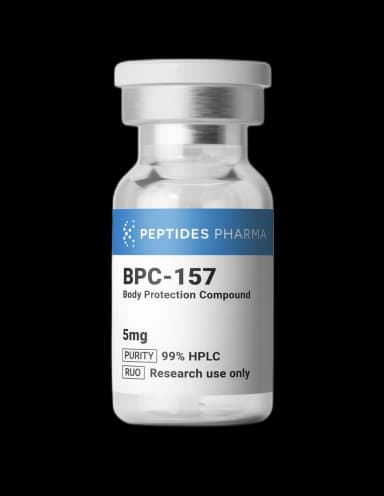
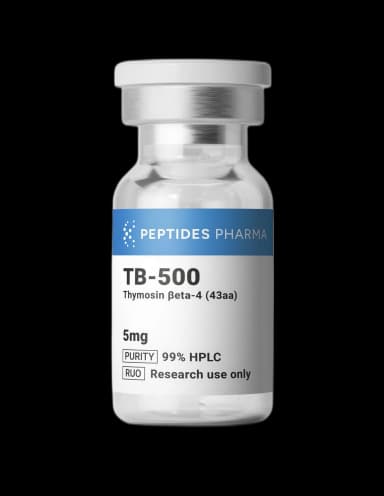
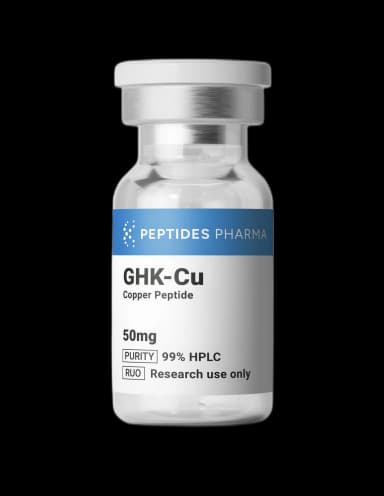
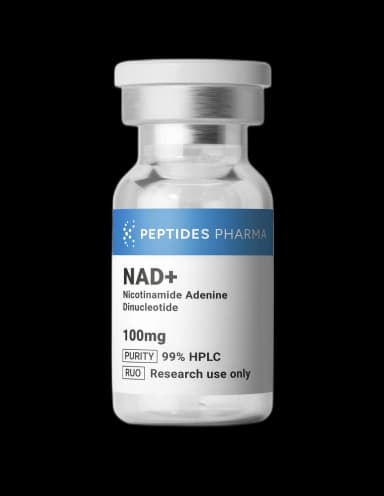
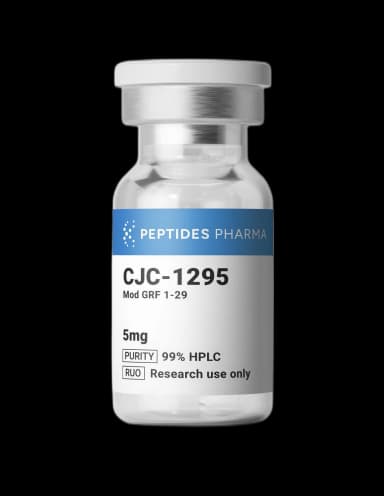
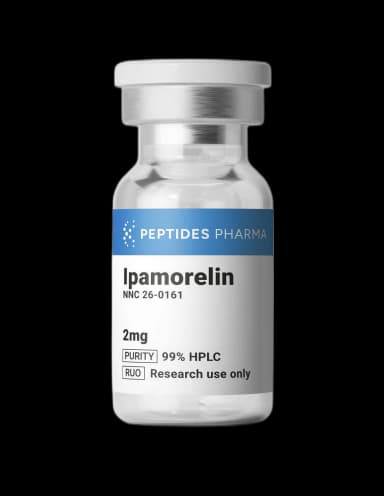
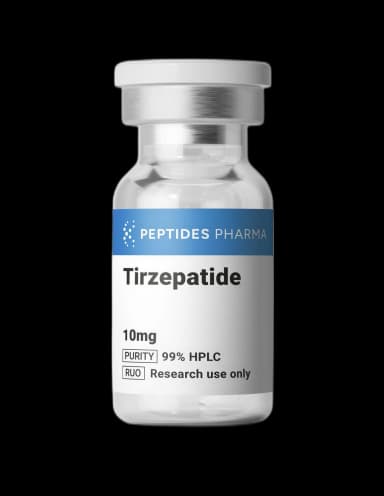
| Peptide | Molecular Weight (Da) | Amino Acids | Molecular Formula | CAS Number | |---------|----------------------|-------------|-------------------|------------| | BPC-157 | 1,419.53 | 15 | C₆₂H₉₈N₁₆O₂₂ | 137525-51-0 | | TB-500 (Thymosin β4) | 4,963.50 | 43 | C₂₁₂H₃₅₀N₅₆O₇₈S | 77591-33-4 | | GHK-Cu | 403.93 (free) / 467.44 (Cu²⁺) | 3 + Cu | C₁₄H₂₄N₆O₄ · Cu | 49557-75-7 | | CJC-1295 (no DAC) | 3,367.97 | 29 | C₁₅₂H₂₅₂N₄₄O₄₂ | 863288-34-0 | | Ipamorelin | 711.85 | 5 | C₃₈H₄₉N₉O₅ | 170851-70-4 | | Glutathione (GSH) | 307.32 | 3 | C₁₀H₁₇N₃O₆S | 70-18-8 | | NAD+ | 663.43 | N/A (dinucleotide) | C₂₁H₂₇N₇O₁₄P₂ | 53-84-9 | | Tirzepatide | 4,813.45 | 39 + C₂₀ fatty acid | C₂₂₅H₃₄₈N₄₈O₆₈ | 2023788-19-2 | | Semaglutide | 4,113.58 | 31 + C₁₈ fatty acid | C₁₈₇H₂₉₁N₄₅O₅₉ | 910463-68-2 |
Other Common Research Peptides:
| Peptide | Molecular Weight (Da) | Amino Acids | CAS Number | |---------|----------------------|-------------|------------| | Ac-SDKP (TB4 FRAG) | 487.51 | 4 | 49557-75-7 | | GHRP-6 | 873.01 | 6 | 87616-84-0 | | GHRP-2 | 817.97 | 6 | 158861-67-7 | | Hexarelin | 887.04 | 6 | 140703-51-1 | | Sermorelin | 3,357.93 | 29 | 86168-78-7 | | Epithalon (Epitalon) | 390.35 | 4 | 307297-39-8 | | Selank | 751.87 | 7 | 129954-34-3 | | Semax | 813.93 | 7 | 80714-61-0 | | Melanotan II | 1,024.18 | 7 (cyclic) | 121062-08-6 | | PT-141 (Bremelanotide) | 1,025.18 | 7 (cyclic) | 189691-06-3 | | AOD-9604 | 1,815.08 | 15 | 221231-10-3 | | DSIP (Delta Sleep) | 848.81 | 9 | 62568-57-4 | | LL-37 | 4,493.33 | 37 | 154947-66-7 | | KPV | 342.43 | 3 | 67727-97-3 | | Thymalin | 858.97 | 2 (Glu-Trp) | 63958-90-7 | | Dihexa | 507.63 | Modified hexapeptide | 1401708-83-5 | | PE-22-28 | 737.85 | 7 | N/A | | GLP-1 (7-36) | 3,297.68 | 30 | 112149-90-1 |
How Molecular Weight Affects Peptide Research
Understanding molecular weight is critical for several aspects of peptide research:
Dosing and concentration calculations: Molar concentrations (μM, nM) require accurate molecular weight. A 1 mg/mL solution of BPC-157 (MW 1,419.53 Da) = 704.5 μM, whereas the same mass concentration of TB-500 (MW 4,963.50 Da) = only 201.5 μM.
Solubility prediction: Smaller peptides (<1,000 Da) generally dissolve more readily in aqueous solutions. Larger peptides may require co-solvents or pH adjustment.
Membrane permeability: Peptides below ~500 Da may cross cell membranes more readily (Lipinski's Rule of Five applies as a rough guide). Larger peptides typically require receptor-mediated uptake.
Half-life correlation: Smaller peptide fragments (like Ac-SDKP at 487 Da) are typically degraded faster by peptidases than larger proteins with tertiary structure. Modifications like PEGylation or fatty acid conjugation (as in semaglutide and tirzepatide) extend half-life.
Mass spectrometry identification: Accurate molecular weight is essential for peptide identification via MALDI-TOF or ESI-MS. The values in this table can serve as reference standards for QC analysis.
RECOMMENDED PRODUCT
Converting Between Mass and Moles
For laboratory calculations, use these conversion formulas:
Mass to moles: moles = mass (g) / molecular weight (Da)
Moles to mass: mass (g) = moles × molecular weight (Da)
Practical examples:
1. BPC-157 (MW 1,419.53 Da): To prepare 1 mL of a 100 μM solution: mass = 100 × 10⁻⁶ × 1,419.53 = 0.142 mg
2. Ipamorelin (MW 711.85 Da): To prepare 10 mL of a 1 mM solution: mass = 1 × 10⁻³ × 711.85 × 10 = 7.12 mg
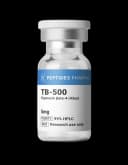
3. TB-500 (MW 4,963.50 Da): 5 mg reconstituted in 1 mL: concentration = 5 / 4,963.50 × 10⁶ = 1,007 μM ≈ 1 mM
Peptides Pharma research vials come pre-mixed at precise concentrations, eliminating the need for manual reconstitution calculations.
Quality Verification Using Molecular Weight
Molecular weight analysis is one of the primary quality control methods for peptide verification:
Mass spectrometry (MS): MALDI-TOF or ESI-MS confirms the molecular weight matches the expected value within ±0.1% tolerance. This verifies correct synthesis and absence of truncated sequences or modifications.
HPLC-MS: Combines chromatographic separation with mass detection for simultaneous purity and identity confirmation.
What to look for in a Certificate of Analysis (COA): - Observed mass should match theoretical mass within instrument tolerance - Major peak should represent >99% of total ion current (for >99% purity) - No significant peaks at unexpected masses (indicating impurities or degradation)
All Peptides Pharma peptides ship with third-party COAs including mass spectrometry data, HPLC purity analysis (>99%), and endotoxin testing results.