
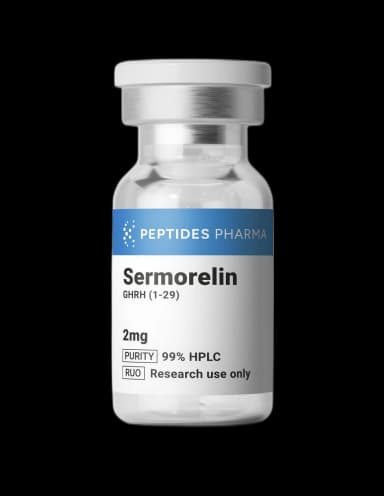
How Sermorelin Stimulates Natural GH Production
Sermorelin (GRF 1-29 NH2) is a synthetic peptide containing the first 29 amino acids of the 44-amino acid human GHRH molecule. These 29 residues are sufficient for full biological activity at the GHRH receptor:
Physiological GH Release: Sermorelin binds GHRH receptors on somatotroph cells in the anterior pituitary, stimulating GH synthesis and secretion through the natural signalling cascade. This preserves the pulsatile release pattern and maintains negative feedback via somatostatin.
IGF-1 Normalisation: By stimulating endogenous GH production, Sermorelin gradually normalises IGF-1 levels within physiological ranges. This avoids the supraphysiological IGF-1 spikes associated with exogenous GH administration.
Clinical History: Sermorelin was FDA-approved for diagnostic evaluation of pituitary GH secretory capacity and for treatment of idiopathic GH deficiency in children. While the commercial product was discontinued, the peptide remains widely available for research and compounding use.
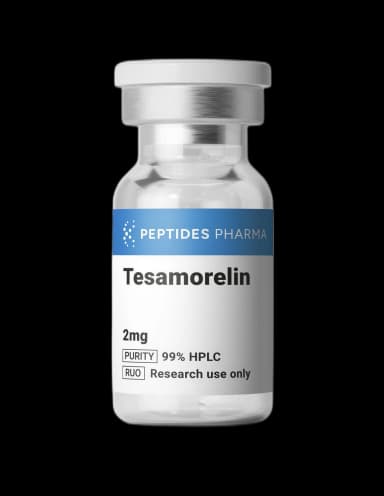
How Tesamorelin Provides Enhanced GHRH Signalling
Tesamorelin is a synthetic GHRH analogue modified with a trans-3-hexenoic acid moiety attached to the tyrosine residue at position 1. This modification enhances metabolic stability and receptor binding:
Enhanced Potency: The chemical modification increases Tesamorelin's resistance to enzymatic degradation and improves receptor binding affinity, producing a more potent GH release per dose compared to unmodified GHRH fragments like Sermorelin.
Visceral Fat Reduction: The pivotal clinical trials for Tesamorelin demonstrated 15-18% reduction in visceral adipose tissue (VAT) over 26 weeks in HIV-associated lipodystrophy. This represents the strongest clinical evidence for any GHRH analogue in body composition research.
Cognitive Benefits: Emerging research suggests Tesamorelin may have cognitive benefits, with studies in older adults showing improved executive function and verbal memory, potentially mediated through IGF-1-dependent neuroplasticity mechanisms.
GHRH Analogues vs Direct GH Secretagogues
Understanding where Sermorelin and Tesamorelin fit in the broader GH peptide landscape is essential for protocol design:
GHRH Analogues (Sermorelin, Tesamorelin): Work through the GHRH receptor on the pituitary. They stimulate GH production and release through the natural pathway, preserving pulsatile patterns and feedback regulation. Limited by somatostatin — if somatostatin tone is high, GHRH stimulation is blunted.
GH Secretagogues (Ipamorelin, GHRP-6, Hexarelin): Work through the ghrelin receptor (GHSR). They trigger GH release by a complementary pathway and can partially override somatostatin inhibition. This is why GHRH analogues and GHRPs are often combined for synergistic effects.
Combination Protocols: Research frequently combines a GHRH analogue (Sermorelin or Tesamorelin) with a GHRP (typically Ipamorelin) for synergistic GH release through dual-pathway activation. Both classes are available from Peptides Pharma as lyophilized vials.
Which Should You Choose?
Choose Sermorelin if your primary research focus is: - Physiological GH restoration within natural ranges - Long-term GH support with decades of safety data - Pituitary function assessment and GH reserve testing - Cost-effective GHRH analogue research - Paediatric growth and development models
Choose Tesamorelin if your primary research focus is: - Visceral fat reduction with strong clinical evidence - Maximum GH release from a GHRH analogue - Lipodystrophy and body composition research - Cognitive function and IGF-1-mediated neuroplasticity - Research requiring an FDA-approved reference compound
Choose both if: - You are comparing GHRH analogue potency and structure-activity relationships - Your research involves dose-response studies across the GHRH class - You want to understand how chemical modification affects GHRH pharmacology

