A comprehensive exploration of NAD+ — the essential coenzyme at the heart of cellular energy, DNA repair, and longevity research. From molecular mechanisms to optimal delivery methods.
10 min read · Updated 2026-03-05
What Is NAD+ and Why Does It Matter?
Nicotinamide adenine dinucleotide (NAD+) is a coenzyme found in every living cell. It plays a central role in over 500 enzymatic reactions and is essential for energy metabolism, DNA repair, gene expression, and cellular signalling. Without NAD+, life as we know it simply cannot function.
NAD+ exists in two forms: NAD+ (oxidised) and NADH (reduced). The ratio between these two forms drives the metabolic reactions of the citric acid cycle and oxidative phosphorylation — the processes by which cells convert nutrients into ATP (adenosine triphosphate), the universal energy currency of the cell.
Perhaps the most significant finding in recent NAD+ research is that cellular NAD+ levels decline dramatically with age. Studies have shown that NAD+ levels in human tissue can fall by as much as 50% between the ages of 40 and 60. This decline is now believed to be a key driver of age-related metabolic dysfunction, mitochondrial deterioration, and increased susceptibility to disease.
The discovery of NAD+'s central role in ageing has sparked an explosion of research interest, with over 12,000 published papers on NAD+ biology in the last decade alone.
NAD+ and the Sirtuin Pathway
One of the most exciting areas of NAD+ research centres on the sirtuins — a family of seven NAD+-dependent enzymes (SIRT1–SIRT7) that regulate critical cellular processes.
SIRT1 is the most extensively studied sirtuin. It requires NAD+ as a substrate and regulates: - DNA repair: SIRT1 activates DNA repair pathways, helping maintain genomic stability - Mitochondrial biogenesis: Through PGC-1α activation, SIRT1 promotes the creation of new mitochondria - Inflammation: SIRT1 suppresses NF-κB, a master regulator of inflammatory gene expression - Circadian rhythm: SIRT1 modulates the molecular clock, linking metabolism to sleep-wake cycles - Autophagy: SIRT1 promotes cellular self-cleaning, removing damaged proteins and organelles
SIRT3 operates primarily within mitochondria, where it deacetylates metabolic enzymes to optimise energy production and reduce reactive oxygen species (ROS) generation.
SIRT6 is critical for genome maintenance, telomere integrity, and glucose homeostasis. Research in mice has shown that SIRT6 overexpression can extend lifespan by up to 15%.
The fundamental insight is this: without adequate NAD+, sirtuins cannot function. As NAD+ declines with age, sirtuin activity decreases proportionally — contributing to the cascade of cellular dysfunction we associate with ageing.
RECOMMENDED PRODUCT
NAD+ in Mitochondrial and Metabolic Research
Mitochondria are the powerhouses of the cell, and NAD+ is their most critical cofactor. The relationship between NAD+ and mitochondrial function is a cornerstone of metabolic research.
Energy Production NAD+ serves as the primary electron carrier in the electron transport chain (ETC). In its reduced form (NADH), it donates electrons to Complex I of the ETC, initiating the cascade that produces approximately 90% of cellular ATP. When NAD+ levels fall, this process becomes less efficient — cells produce less energy and generate more damaging free radicals as a byproduct.
Mitochondrial Quality Control NAD+ supports mitophagy — the selective removal of damaged mitochondria. Through SIRT1 and SIRT3 activation, adequate NAD+ levels ensure that dysfunctional mitochondria are identified and recycled, preventing the accumulation of defective organelles that characterises ageing tissues.
Metabolic Flexibility Research shows that NAD+ levels influence the cell's ability to switch between glucose oxidation and fatty acid oxidation — a process known as metabolic flexibility. Declining NAD+ reduces this flexibility, contributing to insulin resistance, obesity, and metabolic syndrome.
The NAD+-CD38 Axis The enzyme CD38 is one of the primary consumers of NAD+ in ageing tissues. CD38 expression increases with age and inflammation, creating a vicious cycle: inflammation raises CD38, CD38 depletes NAD+, low NAD+ impairs sirtuin-mediated inflammation control, and inflammation increases further. Understanding and interrupting this cycle is a major focus of current NAD+ research.
NAD+ Delivery Methods Compared
How NAD+ is delivered to the body has a profound impact on its bioavailability and effectiveness. Researchers have several options, each with distinct advantages and limitations.
Oral Supplements (NMN / NR) Nicotinamide mononucleotide (NMN) and nicotinamide riboside (NR) are NAD+ precursors taken orally. They must pass through the digestive system and liver before being converted to NAD+ in target tissues. - Bioavailability: Estimated 10–30% (significant first-pass metabolism) - Onset: Hours to days for measurable NAD+ elevation - Convenience: High (capsule or powder form) - Cost: Moderate (daily supplementation required)
Intravenous (IV) Infusion Direct IV administration of NAD+ bypasses the digestive system entirely, delivering the coenzyme straight into the bloodstream. - Bioavailability: ~100% (direct systemic delivery) - Onset: Minutes to hours - Drawbacks: Requires clinical setting, 2–4 hour infusion time, significant discomfort (flushing, nausea), expensive (€250–1,000 per session)
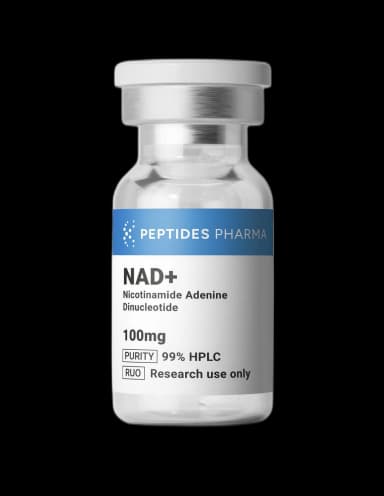
Subcutaneous Injection (NAD+ vial System) Peptides Pharma's NAD+ Vial delivers NAD+ via subcutaneous injection — a middle ground that combines high bioavailability with practical convenience. - Bioavailability: Estimated 80–95% (bypasses first-pass metabolism) - Onset: 15–30 minutes - Convenience: Self-administered in under 60 seconds - Cost: €189 for a 30-day supply (NAD+ vial) - Advantage: No IV clinic visits, no infusion discomfort, no digestive losses
For researchers seeking reliable, high-bioavailability NAD+ delivery without the logistical burden of IV infusion, the subcutaneous route via Peptides Pharma's NAD+ vial system offers the optimal balance.
RECOMMENDED PRODUCT
Published Research and Clinical Evidence
NAD+ research has moved rapidly from basic science into translational and early clinical studies. Key milestones include:
Rajman et al. (2018) — Cell Metabolism Comprehensive review establishing the link between NAD+ decline, sirtuin dysfunction, and age-related disease. This paper cemented NAD+ as a central target in longevity research.
Yoshino et al. (2021) — Science Randomised, placebo-controlled trial demonstrating that NMN supplementation increased muscle NAD+ metabolites and improved insulin sensitivity in prediabetic women. One of the first human clinical trials of an NAD+ precursor.
Igarashi et al. (2022) — npj Aging Showed that chronic NMN supplementation (250 mg/day) for 12 weeks was safe and effectively increased blood NAD+ levels in healthy middle-aged adults without significant adverse effects.
Verdin Lab (2023) — Nature Aging Demonstrated that maintaining NAD+ levels preserved mitochondrial function and reduced age-related inflammation ("inflammaging") in aged mice, extending healthy lifespan.
Key Takeaways from the Literature: - NAD+ decline is a hallmark of ageing, not merely a consequence - Restoring NAD+ levels reverses multiple markers of age-related decline in animal models - Human clinical trials confirm safety and measurable NAD+ elevation with supplementation - Delivery method significantly affects outcomes — bioavailability matters
Peptides Pharma NAD+ Vial System
Peptides Pharma's NAD+ Vial represents a new approach to NAD+ delivery — combining the bioavailability advantages of injectable administration with the convenience of an at-home vial system.
Specifications: - NAD+ Content: 500 mg per vial - Volume: 5 mL pre-mixed solution - Purity: >99% (HPLC verified) - Dosing Period: 30 days - Delivery: Subcutaneous injection via precision vial - Sterilisation: 0.22μm filtration + gamma ray sterilisation - Storage: 2–8°C refrigerated - Shelf Life: 24 months - Manufacturing: GMP-certified facility (Switzerland)
Why NAD+ vial? The NAD+ vial system was designed specifically for compounds like NAD+ that benefit from bypassing the digestive system. Unlike oral NMN/NR supplements that lose 70–90% of their active compound to first-pass metabolism, NAD+ vial delivers NAD+ directly to subcutaneous tissue, where it enters the bloodstream with minimal loss.
Compared to IV infusion, NAD+ vial eliminates the need for clinic visits, extended infusion times, and the discomfort associated with high-dose IV NAD+ administration. The entire process takes under 60 seconds and can be performed at home.
Peptides Pharma ships NAD+ vials with worldwide delivery, temperature-controlled packaging, and full certificates of analysis.