A review of published research on peptides and joint health. What BPC-157, TB-500, and GHK-Cu studies show about cartilage repair, tendon healing, and inflammation.
8 min read · Updated 2026-03-04
Joint Pain Research: Why Peptides Are Being Studied
Joint pain affects millions of people in the UK, with osteoarthritis alone impacting over 8.75 million people who seek treatment annually. Current standard treatments — NSAIDs, corticosteroid injections, and eventually joint replacement — address symptoms but often fail to promote actual tissue repair.
This gap has driven increasing research interest in bioactive peptides that may support joint tissue healing at the cellular level. Unlike anti-inflammatory drugs that mask pain, peptides like BPC-157 target the underlying repair mechanisms — growth factor expression, collagen synthesis, and cellular migration.
This article reviews published research on peptides relevant to joint health. All findings are from peer-reviewed studies; this is not medical advice.
BPC-157 and Joint Tissue Research
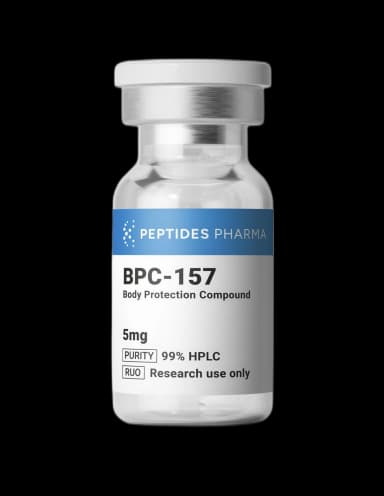
BPC-157 is the most extensively studied peptide for musculoskeletal repair, with particular relevance to joint tissues:
Tendon healing studies: Multiple studies by the Zagreb University research group demonstrated that BPC-157 significantly accelerated Achilles tendon healing in rat models. Key findings include: - Increased tendon-to-bone healing strength - Improved collagen fibre alignment and organisation - Faster restoration of biomechanical function - Enhanced tenocyte proliferation and migration
Ligament research: Medial collateral ligament (MCL) injury models showed BPC-157 promoted faster ligament healing with improved tissue quality. The peptide appears to support both the inflammatory resolution phase and the proliferative repair phase.
Cartilage-relevant mechanisms: While direct cartilage regeneration studies are limited, BPC-157's mechanisms are highly relevant to joint health: - VEGF upregulation improves blood supply to joint structures - Growth factor expression supports chondrocyte activity - Anti-inflammatory properties may reduce joint inflammation - Nitric oxide modulation affects joint blood flow and healing
Arthritis models: Preliminary animal studies have explored BPC-157 in adjuvant-induced arthritis models, with promising results showing reduced joint swelling and improved functional scores.
RECOMMENDED PRODUCT
TB-500 and Joint Repair Mechanisms
TB-500 (Thymosin Beta-4 fragment) contributes complementary mechanisms relevant to joint health:
Cell migration and repair: TB-500's primary mechanism — promoting cell migration through actin polymerisation — is fundamental to joint tissue repair. Injured cartilage, tendons, and ligaments require cells to migrate to damage sites before repair can begin.
Anti-fibrotic properties: One of the most significant joint health challenges is fibrosis — the replacement of functional tissue with scar tissue. TB-500 has demonstrated anti-fibrotic effects in multiple tissue models, suggesting potential value in preserving joint tissue quality during healing.
Angiogenesis: New blood vessel formation is critical for delivering nutrients and repair cells to injured joint structures. TB-500's pro-angiogenic effects have been documented in cardiac and skin models, with potential application to joint vasculature.
Inflammation modulation: TB-500 modulates inflammatory cytokines, which is directly relevant to inflammatory joint conditions where excessive inflammation drives tissue destruction.
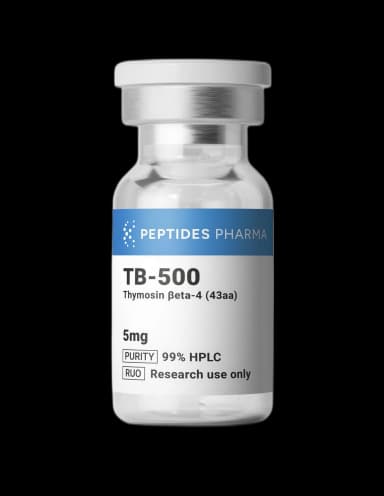
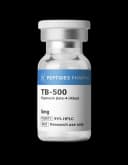
Peptides Pharma's TB-500 Research Vial (€119) provides a 30-day research supply in a pre-mixed, precision-dosing format.
GHK-Cu: The Collagen Connection
GHK-Cu (copper peptide) is relevant to joint health through its effects on extracellular matrix components:
Collagen synthesis: Joint cartilage is primarily composed of Type II collagen. While GHK-Cu's most documented effects are on Type I and III collagen (skin and connective tissue), its broad gene expression modulation — affecting over 4,000 genes — includes pathways relevant to cartilage matrix maintenance.
Glycosaminoglycan (GAG) support: Cartilage relies on GAGs (including hyaluronic acid and chondroitin sulphate) for shock absorption and lubrication. Published research suggests GHK-Cu supports GAG synthesis through its gene expression effects.
Anti-inflammatory gene regulation: GHK-Cu's gene expression studies show upregulation of anti-inflammatory pathways and downregulation of pro-inflammatory genes — potentially beneficial in inflammatory joint conditions.
Tissue remodelling: GHK-Cu promotes organised tissue remodelling rather than fibrotic scarring, which is essential for maintaining functional joint mechanics after injury.
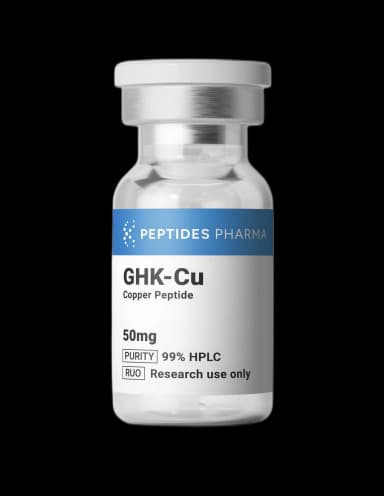
Peptides Pharma's GHK-Cu Research Vial (€139) provides a 30-day research supply.
RECOMMENDED PRODUCT
The BPC-157 + TB-500 Joint Research Stack
The combination of BPC-157 and TB-500 is the most popular peptide protocol in joint-related research, and the mechanistic rationale is strong:
BPC-157 provides: - Growth factor signals directing tissue repair - Anti-inflammatory cytokine modulation - Enhanced blood flow to joint structures via NO modulation - Direct tendon and ligament healing support
TB-500 provides: - Cellular migration to injury sites - Anti-fibrotic protection (preserving tissue quality) - New blood vessel formation - Structural protein organisation
Together, they address: 1. Inflammation control (both peptides) 2. Cell recruitment to damage sites (TB-500) 3. Growth factor signalling for repair (BPC-157) 4. Blood supply restoration (both peptides) 5. Quality tissue regeneration vs scarring (TB-500)
Peptides Pharma offers both peptides at €119 (BPC-157) and €119 (TB-500). The combined €238 order qualifies for free UK shipping and provides 60 days of dual-peptide research material.
Important: Joint conditions should be assessed and managed by qualified medical professionals. Research peptides are not approved treatments for arthritis or joint pain.