
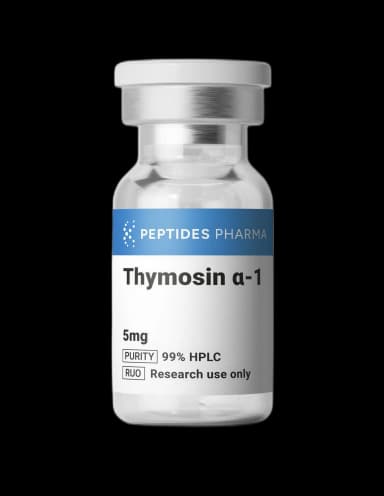
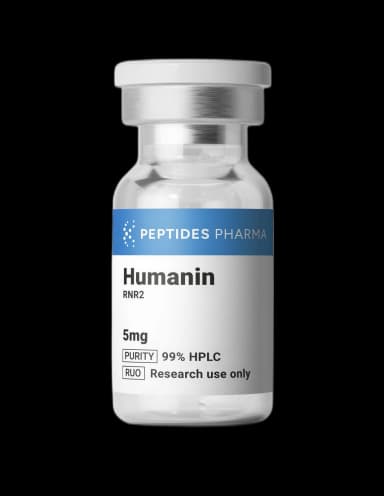
How Thymosin Alpha-1 Restores Immune Competence
Thymosin Alpha-1 (Tα1) is a naturally occurring 28-amino acid peptide first isolated from thymic tissue by Allan Goldstein in the 1970s. It plays a central role in immune system maturation and regulation:
T-Cell Maturation: Tα1 promotes the differentiation of immature T-cell precursors into functional CD4+ and CD8+ T-cells. As thymic function declines with age (thymic involution), endogenous Tα1 production falls, contributing to the progressive immune decline known as immunosenescence.
Dendritic Cell Activation: Research demonstrates Tα1 enhances dendritic cell maturation and antigen presentation — improving the immune system's ability to detect and respond to pathogens and abnormal cells.
Toll-Like Receptor Signalling: Tα1 modulates TLR-2, TLR-7, and TLR-9 signalling, enhancing innate immune pattern recognition without triggering excessive inflammation. This balanced immune modulation distinguishes it from immunostimulants that may provoke inflammatory damage.
Clinical Validation: Tα1 (brand name Zadaxin) is approved in over 30 countries for hepatitis B, hepatitis C, and as an immune adjuvant. It has FDA orphan drug designation and has been studied in clinical trials for immunocompromised patients.
How Humanin Protects Cells Against Stress and Damage
Humanin is a 24-amino acid mitochondria-derived peptide encoded in the MT-RNR2 gene. Its cytoprotective mechanisms span multiple survival pathways:
Anti-Apoptotic Signalling: Humanin activates STAT3, ERK1/2, and PI3K/AKT survival cascades, protecting cells against programmed cell death. It directly interacts with pro-apoptotic proteins BAX and BID, preventing mitochondrial membrane permeabilisation and caspase activation.
Oxidative Stress Protection: Research indicates Humanin reduces reactive oxygen species (ROS) accumulation and protects against oxidative damage to lipids, proteins, and DNA. This antioxidant effect is mediated through both direct ROS scavenging and activation of endogenous antioxidant enzymes.
Neuroprotection: Humanin was discovered through its ability to protect neurons against amyloid-beta toxicity. Subsequent research has demonstrated neuroprotective effects against multiple insults, including glutamate excitotoxicity, prion proteins, and ischaemic damage.
Metabolic Protection: Studies show Humanin improves insulin sensitivity and modulates glucose metabolism through interaction with IGFBP-3 and the IGF signalling axis.
Complementary Roles in Healthy Aging
Thymosin Alpha-1 and Humanin address two critical pillars of healthy aging that both decline with age:
Immune Aging (Tα1): Thymic involution begins in puberty and accelerates after age 50, progressively reducing T-cell diversity and immune surveillance capacity. Tα1 helps restore immune competence by promoting T-cell maturation and enhancing innate immune function — addressing the immunosenescence that increases vulnerability to infections and reduces immune surveillance.
Cellular Stress Resistance (Humanin): As cells age, their ability to withstand oxidative stress, metabolic disruption, and apoptotic triggers diminishes. Humanin's broad cytoprotective signalling helps maintain cellular viability under stress, preserving tissue function and reducing the accumulation of damage that drives aging.
Together, these compounds address the dual challenge of aging: declining immune defence and declining cellular resilience. Both are available as lyophilized vials from Peptides Pharma for research applications.
Which Should You Choose?
Choose Thymosin Alpha-1 if your primary research focus is: - Immune modulation and immunosenescence - T-cell biology, dendritic cell maturation, or NK cell function - Antiviral research and infection models - Research requiring a clinically validated reference compound (approved in 30+ countries) - Vaccine adjuvant research and immune enhancement
Choose Humanin if your primary research focus is: - Cytoprotection and cellular stress resistance - Neurodegenerative disease models (Alzheimer's, neuronal survival) - Anti-apoptotic signalling pathways (STAT3, PI3K/AKT, ERK) - Metabolic aging and insulin sensitivity - Mitochondria-derived peptide biology
Choose both if: - Your research spans immune aging and cellular stress resistance - You are studying the intersection of immune competence and cytoprotection - Multi-target aging intervention is the focus of your research programme - You want to address both immunosenescence and cellular vulnerability in a single protocol

