An in-depth research guide to GHK-Cu copper peptide: its mechanisms in hair growth, skin rejuvenation, wound healing, and anti-aging applications.
9 min read · Updated 2026-03-06
What Is GHK-Cu?
GHK-Cu (glycyl-L-histidyl-L-lysine copper) is a naturally occurring tripeptide first identified in human plasma by Dr. Loren Pickart in 1973. It exists naturally in blood, saliva, and urine, with plasma levels declining significantly with age — from approximately 200ng/mL at age 20 to 80ng/mL by age 60.
This age-related decline has made GHK-Cu one of the most studied peptides in anti-aging, skin rejuvenation, and more recently, hair growth research. Over 70 peer-reviewed studies have been published on its biological effects.
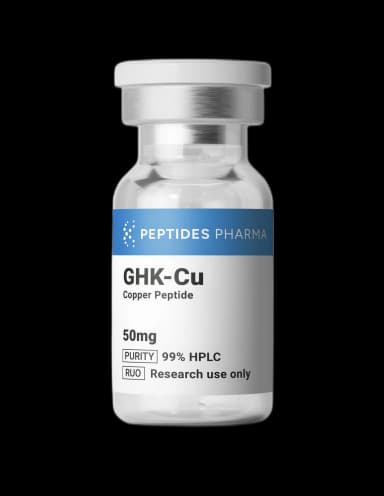
Peptides Pharma's GHK-Cu vial delivers a potent 60mg dose — one of the highest concentrations available in the UK research market.
GHK-Cu for Hair Growth Research
Hair loss research has identified GHK-Cu as one of the most promising peptide candidates:
Follicle stimulation: GHK-Cu has been shown to stimulate hair follicle cells, increasing both the size of follicles and the rate of hair growth.
Anagen phase extension: Research indicates GHK-Cu can extend the anagen (active growth) phase of the hair cycle, meaning hair grows for longer before entering the rest phase.
DHT pathway modulation: While not a direct DHT blocker, GHK-Cu has been shown to influence the expression of genes involved in the androgen pathway, which is relevant to androgenetic alopecia (pattern hair loss).
Scalp blood supply: GHK-Cu promotes angiogenesis (new blood vessel formation), improving nutrient delivery to hair follicles — a key factor in maintaining follicle health.
Dermal papilla cells: These cells control hair follicle cycling. GHK-Cu has been shown to stimulate dermal papilla cell proliferation and increase their expression of hair growth-promoting genes.
Comparison to minoxidil: Studies show GHK-Cu and minoxidil work through different mechanisms. Some researchers study both compounds together, hypothesising synergistic effects.
RECOMMENDED PRODUCT
GHK-Cu for Skin Rejuvenation
GHK-Cu is one of the most well-characterised peptides for skin research:
Collagen synthesis: Increases production of collagen types I, III, and V — the structural proteins responsible for skin firmness.
Elastin production: Stimulates elastin synthesis, improving skin elasticity and reducing sagging.
Glycosaminoglycans: Increases production of GAGs including hyaluronic acid and dermatan sulphate, supporting skin hydration and volume.
Wound healing: Accelerates wound repair through multiple mechanisms: increased cell migration, enhanced blood vessel formation, and improved extracellular matrix deposition.
Antioxidant: GHK-Cu scavenges free radicals and reduces oxidative stress — a major driver of skin aging. It also activates the body's antioxidant defence systems.
Anti-inflammatory: Reduces chronic low-grade inflammation (inflammaging) that contributes to skin damage and collagen breakdown.
Gene expression: Studies show GHK-Cu can modulate the expression of over 4,000 human genes, with many related to tissue remodelling and repair.
GHK-Cu Dosing and Administration
Peptides Pharma's GHK-Cu vial specifications:
- Dose per vial: 60mg GHK-Cu - Volume: 3mL - Purity: >99% (HPLC verified) - Dosing period: 30 days of precision dosing - Storage: 2-8°C refrigerated - Shelf life: 24 months - Format: Pre-mixed, ready to use
Published research on GHK-Cu uses various dosing protocols depending on the application (hair vs skin vs wound healing). Peptides Pharma's 60mg vial provides sufficient compound for extended research protocols.
The vial format eliminates reconstitution requirements, which is particularly important for GHK-Cu as the copper complex can be sensitive to improper handling.
Price: €139 — competitive for the 60mg dose and >99% purity level.
RECOMMENDED PRODUCT
Combining GHK-Cu with Other Peptides Pharma
Researchers frequently study GHK-Cu alongside other compounds:
GHK-Cu + Glutathione (€99): Complementary mechanisms for skin research. GHK-Cu promotes structural protein synthesis while Glutathione provides antioxidant defence and melanin regulation. A popular combination for comprehensive skin rejuvenation research.
GHK-Cu + BPC-157 (€119): For wound healing and tissue repair research. BPC-157 accelerates healing through growth factor expression, while GHK-Cu promotes collagen deposition and vascularisation.
GHK-Cu + NAD+ (€189 or NAD+ vial €299): For anti-aging research. NAD+ supports cellular energy and DNA repair, while GHK-Cu targets structural tissue remodelling. Together, they address both intracellular and extracellular aging pathways.
All Peptides Pharma vials are designed for 30-day protocols, making it easy to run parallel research with multiple compounds.