


How to Reconstitute Peptide Vials: Step-by-Step Guide
5 min read
Votre panier est vide
Commencez à ajouter des peptides de recherche à votre panier.
PARCOURIR LES PRODUITSAgeing is increasingly understood not as an inevitable decline but as a series of identifiable molecular processes — NAD+ depletion, mitochondrial dysfunction, oxidative accumulation, and epigenetic drift. Peptides Pharma's longevity-focused compounds target these hallmarks at the cellular level. NAD+ is the critical coenzyme that declines by up to 50% between ages 40 and 60, GHK-Cu modulates the expression of over 4,000 genes involved in tissue remodelling, and Glutathione serves as the body's master antioxidant against oxidative damage. Together, they represent a multi-pathway approach to longevity science.
4,000+
GENES MODULATED BY GHK-CU
50%
NAD+ DECLINE BY AGE 60 (ESTIMATED)
>99%
PURITY ACROSS ALL COMPOUNDS
4
HALLMARKS OF AGEING ADDRESSED
Comprendre le mécanisme d'action derrière la recherche
NAD+ (Nicotinamide Adenine Dinucleotide) is essential for sirtuin activation — the family of proteins that regulate DNA repair, mitochondrial biogenesis, and inflammatory response. Research shows NAD+ levels decline dramatically with age, and this decline correlates with key ageing biomarkers. Studies suggest direct NAD+ supplementation may restore sirtuin function and reactivate cellular maintenance pathways.
Mitochondrial dysfunction is recognised as a primary hallmark of ageing. NAD+ is a critical cofactor in the electron transport chain, and research indicates declining NAD+ directly impairs mitochondrial ATP production and increases reactive oxygen species leakage. Studies suggest NAD+ replenishment may restore mitochondrial membrane potential and improve cellular energy output.
GHK-Cu is a copper-binding tripeptide that research has identified as a broad-spectrum gene expression modulator. Studies have documented its influence on over 4,000 human genes — upregulating those associated with tissue repair and stem cell markers while suppressing those linked to inflammation and tissue destruction. This epigenetic remodelling effect is unique among peptide compounds studied to date.
Glutathione, often called the master antioxidant, participates in Phase II detoxification and directly neutralises reactive oxygen species. Research demonstrates that glutathione levels decline with age, correlating with increased oxidative damage to DNA, proteins, and lipids. Studies suggest maintaining glutathione levels may protect cellular integrity and slow the accumulation of age-related oxidative damage.
Sirtuins (SIRT1-7) are NAD+-dependent enzymes that play central roles in DNA repair, chromatin remodelling, and stress resistance. Research indicates that NAD+ depletion effectively silences sirtuin activity, impairing the cell's ability to repair damaged DNA. Studies suggest NAD+ supplementation may reactivate these critical maintenance pathways.
NAD+ activates all 7 sirtuin pathways simultaneously
Beyond restoring existing mitochondrial function, research suggests NAD+ may stimulate mitochondrial biogenesis — the creation of new mitochondria. Studies indicate this occurs through SIRT1-mediated activation of PGC-1alpha, the master regulator of mitochondrial production. More mitochondria per cell means greater energy capacity and resilience against age-related decline.
GHK-Cu's ability to modulate over 4,000 human genes represents one of the most comprehensive epigenetic interventions studied. Research shows it upregulates genes for collagen, elastin, decorin, and tissue inhibitors of metalloproteinases while suppressing inflammatory and degradative gene expression. This amounts to a potential genomic reset toward a more youthful expression profile.
Upregulates 1,584 genes, suppresses 2,550 genes toward youthful patterns
Glutathione is present in virtually every human cell and participates in hundreds of enzymatic reactions. Research shows its decline with age leaves cells vulnerable to oxidative damage — the accumulation of which is a recognised driver of ageing. Subcutaneous glutathione delivery may bypass the absorption limitations of oral supplementation.
The brain is disproportionately affected by NAD+ decline due to its high metabolic demands. Research suggests NAD+ replenishment may support neuronal energy metabolism, synaptic plasticity, and resistance to neurodegenerative stress. Studies are investigating the role of NAD+ in age-related cognitive decline and neuroinflammation.
Emerging research links NAD+ status to telomere maintenance through sirtuin-mediated stabilisation of chromosomal structures. GHK-Cu has also been studied for its potential role in supporting tissue stem cell populations. Together, these mechanisms touch on the fundamental molecular drivers of cellular ageing and replicative senescence.
Systèmes d'administration de peptides de recherche premium, prémélangés et prêts à l'emploi
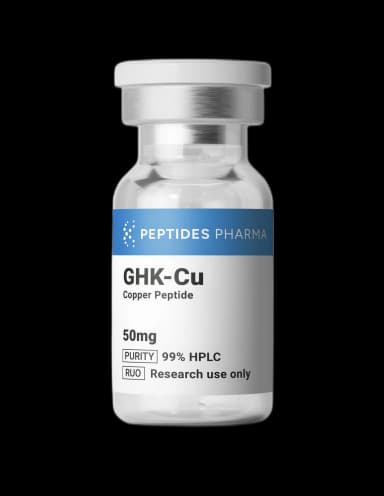
Copper Peptide
A copper-binding tripeptide investigated for its role in tissue remodelling, collagen synthesis, and gene expression modulation. Studies suggest GHK-Cu may activate regenerative processes through copper-mediated signalling.
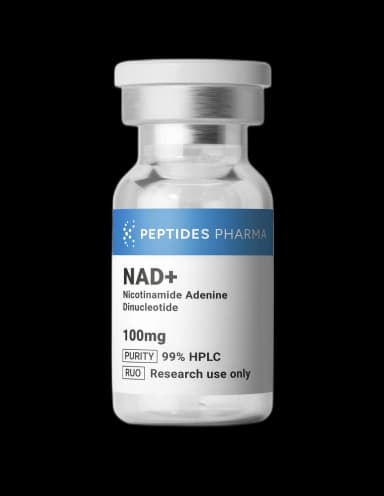
Nicotinamide Adenine Dinucleotide
A critical coenzyme present in every living cell, studied for its role in mitochondrial metabolism, sirtuin activation, and DNA repair pathways. Research suggests NAD+ levels decline with age, driving interest in supplementation research.
Copper Peptide
A copper-binding tripeptide investigated for its role in tissue remodelling, collagen synthesis, and gene expression modulation. Studies suggest GHK-Cu may activate regenerative processes through copper-mediated signalling.
Nicotinamide Adenine Dinucleotide
A critical coenzyme present in every living cell, studied for its role in mitochondrial metabolism, sirtuin activation, and DNA repair pathways. Research suggests NAD+ levels decline with age, driving interest in supplementation research.
Chercheurs et professionnels travaillant dans ces domaines
Investigating the hallmarks of ageing at the molecular level — NAD+ depletion, mitochondrial dysfunction, oxidative stress, and epigenetic drift. Peptides Pharma provides four compounds that address these hallmarks through distinct mechanisms.
Studying interventions that may influence the rate of biological ageing. The combination of NAD+, GHK-Cu, and Glutathione covers the major pathways identified in the scientific consensus on hallmarks of ageing.
Examining proactive approaches to maintaining cellular function before age-related decline becomes clinically significant. Research suggests early intervention on NAD+ and antioxidant status may have outsized long-term effects.
Studying the role of NAD+ in mitochondrial electron transport, membrane potential, and biogenesis — central questions in understanding energy metabolism decline with age.
Why Researchers Choose Peptides Pharma Longevity Compounds
A comprehensive multi-compound approach targeting the four primary hallmarks of ageing. NAD+ addresses mitochondrial and sirtuin function, GHK-Cu provides broad gene expression remodelling, and Glutathione maintains the antioxidant defence system. Research suggests combining these pathways may produce more meaningful effects than any single compound alone.
DURÉE
12-24 weeks (ongoing research)
FRÉQUENCE
Daily subcutaneous (NAD+, GHK-Cu, Glutathione)
PRODUCTS
4 peptides
5 min read
9 min read
10 min read
9 min read
Anti-aging peptides are compounds that target various pathways associated with biological aging. GHK-Cu promotes collagen synthesis and tissue remodelling, NAD+ supports cellular energy and DNA repair mechanisms, and Glutathione provides powerful antioxidant defence against oxidative stress.
GHK-Cu (glycyl-L-histidyl-L-lysine copper) is a naturally occurring tripeptide with a high affinity for copper ions. Research shows it promotes collagen and elastin production, supports wound healing, and has anti-inflammatory and antioxidant properties.
The NAD+ vial is Peptides Pharma's advanced cartridge-based vial system for daily NAD+ microdosing. It delivers pharmaceutical-grade NAD+ with near 100% bioavailability, offering a more affordable and convenient alternative to IV NAD+ therapy.
Many researchers study complementary peptide protocols. GHK-Cu, NAD+, and Glutathione target different aging pathways and are commonly researched together. Always consult relevant literature and qualified professionals for research protocol design.
Step-by-step: prime, attach needle, dial dose, inject, store. No reconstitution needed. Works with all Peptides Pharma vials. Beginner-friendly 5 min guide.
ARTICLEGHK-Cu modulates 4,000+ genes for younger skin. Collagen synthesis, wound healing, and hair growth research explained. Lyophilized vial from €139.
ARTICLENAD+ drives 500+ cell reactions and drops 50% by age 60. Sirtuin pathways, vial vs IV costs, and bioavailability compared. 2026 research guide.
COMPARISONCompare NAD+ and MOTS-C for longevity research. Cellular energy vs mitochondrial signalling, mechanisms, and protocols. Buy >99% purity research peptides.
COMPARISONCompare GHK-Cu and KPV for tissue repair research. Copper peptide remodelling vs anti-inflammatory signalling. Buy >99% purity research-grade peptide vials.
ENCYCLOPEDIACopper Tripeptide / Matrikine. Molecular weight: 403.92 Da. Explore mechanism of action, key studies, and research applications.
BUNDLETriple-compound protocol for cellular aging research
PROTOCOLResearch protocol combining Epithalon, MOTS-C, SS-31, and NAD+ lyophilized vials for comprehensive longevity investigation. Explore telomerase activation, mitochondrial restoration, and cellular energy research.
FAQGHK-Cu copper peptide FAQ. Learn about collagen synthesis, skin repair mechanisms, anti-aging research, purity, and Peptides Pharma's lyophilized vial format.
CATEGORYResearch-grade recovery research vials. BPC-157 and TB-500 for tissue repair, wound healing, and inflammation research. >99% purity, UK delivery.
CATEGORYResearch-grade weight loss research vials. Tirzepatide dual GIP/GLP-1 agonist for metabolic research. Lyophilized vials, >99% purity, worldwide delivery.
Access research-grade NAD+, GHK-Cu, and Glutathione — targeting mitochondrial function, gene expression, and oxidative defence in a comprehensive approach to the molecular hallmarks of ageing.