
How NAD+ Supports Cellular Aging Defence
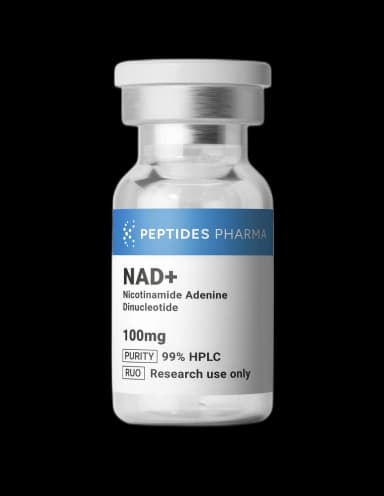
NAD+ is a coenzyme present in every living cell, essential for over 500 enzymatic reactions. Its role in aging research centres on three key enzyme families:
Sirtuins (SIRT1-7): These NAD+-dependent deacetylases regulate gene expression, DNA repair, mitochondrial biogenesis, and inflammation. SIRT1 and SIRT3 are particularly implicated in longevity pathways, and their activity declines as NAD+ levels fall with age.
PARPs (Poly ADP-Ribose Polymerases): PARPs consume NAD+ to repair DNA damage. As DNA damage accumulates with age, PARP activity increases, further depleting NAD+ — creating a vicious cycle of genomic instability and bioenergetic decline.
CD38: This NAD+-consuming enzyme increases with age and chronic inflammation, and is now considered the primary driver of age-related NAD+ depletion. Research suggests that restoring NAD+ levels can partially offset CD38-mediated decline.
How MOTS-C Functions as an Exercise Mimetic
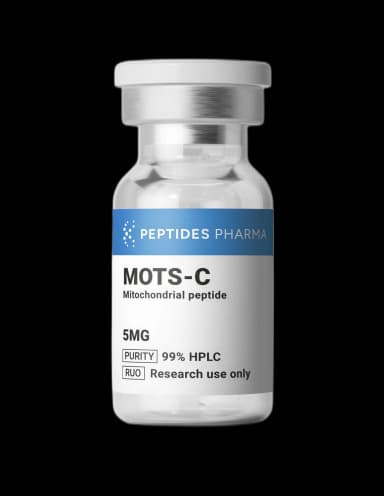
MOTS-C (Mitochondrial Open Reading Frame of the 12S rRNA Type-C) is a 16-amino acid peptide encoded in the mitochondrial genome. Its discovery in 2015 by Lee et al. opened a new frontier in metabolic aging research.
AMPK Activation: MOTS-C activates AMP-activated protein kinase, the master metabolic regulator. This promotes glucose uptake, fatty acid oxidation, and metabolic flexibility — the same pathways stimulated by physical exercise.
Nuclear Translocation: Under metabolic stress, MOTS-C translocates from mitochondria to the nucleus, where it regulates adaptive gene expression related to antioxidant defence and metabolic homeostasis.
Age-Related Decline: Circulating MOTS-C levels decline significantly with age, correlating with insulin resistance, reduced exercise capacity, and metabolic dysfunction. Exogenous MOTS-C administration in aged mouse models reverses age-dependent insulin resistance and improves physical performance.
Combining NAD+ and MOTS-C for Longevity Research
NAD+ and MOTS-C target complementary aspects of cellular aging:
NAD+ addresses: Bioenergetic decline, sirtuin-dependent gene regulation, DNA repair capacity, mitochondrial biogenesis via PGC-1α activation MOTS-C addresses: Metabolic signalling, AMPK-dependent glucose and lipid homeostasis, exercise-mimetic effects, stress-adaptive gene expression
The combination is scientifically rational because NAD+ provides the bioenergetic substrate while MOTS-C activates the metabolic signalling pathways that utilise that energy. Research suggests their mechanisms are synergistic rather than redundant.
Both compounds are available as lyophilized vials from Peptides Pharma, reconstituted with bacteriostatic water for subcutaneous administration. NAD+ may also be administered via other routes depending on the research protocol design.
Which Should You Choose?
Choose NAD+ if your primary research focus is: - Sirtuin biology and epigenetic regulation - DNA repair capacity and genomic stability - Neurodegeneration and neuroprotection models - Broad-spectrum bioenergetic restoration with extensive clinical evidence
Choose MOTS-C if your primary research focus is: - AMPK signalling and metabolic homeostasis - Exercise mimetic effects and physical performance - Insulin sensitivity and glucose metabolism - Mitochondrial-derived peptide biology
Choose both if: - You want a comprehensive anti-aging research protocol - Your research spans bioenergetic and metabolic aging pathways - You are studying multi-target interventions for healthspan extension - Restoring age-depleted endogenous compounds is the focus of your programme

