
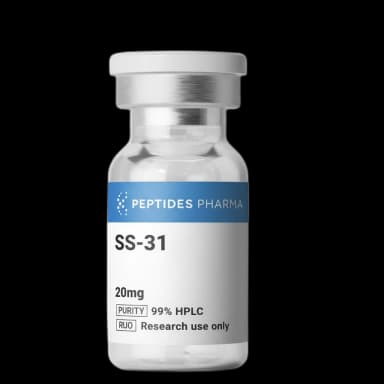
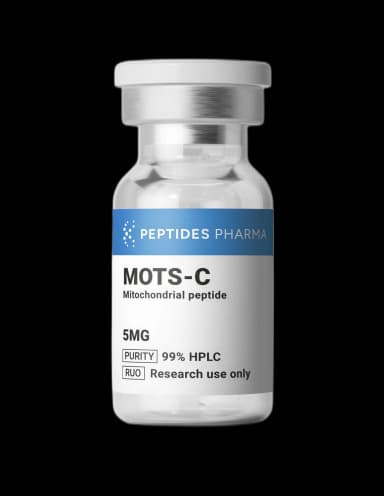
How SS-31 Targets Mitochondrial Structure
SS-31 (Elamipretide) is a synthetic tetrapeptide (D-Arg-Dmt-Lys-Phe-NH2) that selectively binds cardiolipin on the inner mitochondrial membrane.
Cardiolipin Stabilization: Cardiolipin is a phospholipid unique to mitochondria that anchors electron transport chain complexes and maintains cristae architecture. With aging, cardiolipin undergoes peroxidation, disrupting energy production. SS-31 prevents this oxidative damage.
Cytochrome c Restoration: SS-31 converts cytochrome c from a peroxidase (which damages cardiolipin) back to its normal electron-carrying function, breaking the cycle of mitochondrial damage.
ATP Enhancement: By optimizing electron transport chain efficiency, SS-31 increases ATP production while reducing reactive oxygen species (ROS) at the source.
FDA Approval: SS-31 (as Forzinity) is the first and only FDA-approved drug targeting mitochondrial dysfunction, approved for Barth syndrome — a rare cardiomyopathy caused by cardiolipin deficiency.
How MOTS-C Activates Metabolic Signalling
MOTS-C (Mitochondrial Open Reading Frame of the 12S rRNA Type-C) is an endogenous mitochondria-derived peptide discovered in 2015.
AMPK Activation: MOTS-C activates AMP-activated protein kinase (AMPK), the master metabolic regulator also activated by exercise. This promotes glucose uptake, fatty acid oxidation, and metabolic flexibility.
Exercise Mimetic: Research demonstrates MOTS-C enhances physical performance and activates metabolic pathways typically stimulated by exercise.
Nuclear Translocation: Under metabolic stress, MOTS-C translocates to the nucleus where it regulates gene expression related to stress response and metabolism.
Age-Related Decline: Circulating MOTS-C levels decline significantly with age, correlating with metabolic dysfunction and reduced exercise capacity.
Combining SS-31 and MOTS-C for Mitochondrial Research
SS-31 and MOTS-C target complementary aspects of mitochondrial function:
SS-31 addresses: Physical membrane structure, electron transport chain efficiency, ROS production, ATP synthesis MOTS-C addresses: Metabolic signalling, AMPK pathway, glucose/lipid metabolism, exercise-mimetic effects
Think of it as SS-31 fixing the mitochondrial hardware while MOTS-C optimizes the metabolic software. Together with NAD+ (which provides the bioenergetic fuel), these compounds form the Mitochondrial Research Stack — the most comprehensive mitochondrial intervention protocol available.
Both are supplied as lyophilized vials from Peptides Pharma, reconstituted with bacteriostatic water for daily subcutaneous administration.
Which Should You Choose?
Choose SS-31 if your primary research focus is: - Mitochondrial membrane structure and cristae architecture - Electron transport chain dysfunction - Cardioprotection and heart failure models - Age-related mitochondrial decline (structural) - Renal or ophthalmic mitochondrial research
Choose MOTS-C if your primary research focus is: - Metabolic homeostasis and AMPK signalling - Exercise mimetic effects and physical performance - Insulin sensitivity and glucose metabolism - Obesity and metabolic syndrome research - Age-related metabolic decline
Choose both if: - You want the most comprehensive mitochondrial protocol - Your research spans both structural and metabolic mitochondrial function - You're studying synergistic effects of multi-pathway interventions - Aging biology with a mitochondrial focus is your research programme

