Which anti-ageing peptides have genuine research backing? A critical review of NAD+, GHK-Cu, Glutathione, and growth hormone peptides — what the published evidence actually shows.
11 min read · Updated 2026-03-31
Anti-Ageing Peptides: Separating Science from Hype
The anti-ageing peptide market is awash with bold claims. Phrases like 'reverse ageing', 'turn back the clock', and 'fountain of youth' are common — but what does the actual published research support?
This guide takes a critical, evidence-based approach to anti-ageing peptides. We examine the published research for each compound, note the strength of evidence, and honestly assess what is demonstrated versus what is speculative.
Ageing is a complex, multifactorial process involving DNA damage, telomere shortening, mitochondrial dysfunction, cellular senescence, stem cell exhaustion, and extracellular matrix degradation. No single compound addresses all of these — but several peptides target specific hallmarks of ageing with genuine scientific support.
All Peptides Pharma products are sold for research purposes only. This is not medical advice.
NAD+: The Cellular Energy Molecule
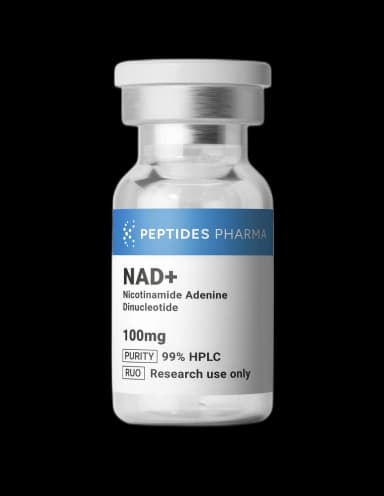
NAD+ (Nicotinamide Adenine Dinucleotide) is not technically a peptide — it is a dinucleotide coenzyme. However, it is a cornerstone of anti-ageing research and a key part of Peptides Pharma's product range.
Why NAD+ declines with age: NAD+ levels fall approximately 50% between ages 40 and 60. This decline impairs: - Sirtuin enzyme function (SIRT1-7) — the 'longevity proteins' - PARP enzyme activity — critical for DNA repair - Mitochondrial function — cellular energy production - Circadian rhythm regulation
Published research evidence: - Mouse studies: NAD+ supplementation (via precursors NMN/NR) restored age-related muscle, cognitive, and metabolic decline - Sinclair Lab (Harvard): NMN reversed vascular ageing in aged mice, restoring blood vessel density to young levels - Human trials: NMN supplementation improved muscle insulin sensitivity, aerobic capacity, and walking speed in older adults (Phase I/II data) - Cell studies: NAD+ repletion reactivated senescent cell function and improved DNA repair capacity
Evidence strength: Strong preclinical evidence. Growing human clinical data. One of the most published anti-ageing compounds globally.
Why injectable NAD+? Oral NAD+ precursors (NMN, NR) must undergo multi-step enzymatic conversion. Peptides Pharma's NAD+ Research Vial (€189) and NAD+ vial system (€299) deliver NAD+ directly, bypassing conversion bottlenecks for maximum bioavailability.
RECOMMENDED PRODUCT
GHK-Cu: The Gene Resetting Peptide
GHK-Cu is arguably the most interesting anti-ageing peptide from a genomic perspective.
The gene expression story: A landmark study using the Broad Institute's Connectivity Map database found that GHK-Cu modulates the expression of over 4,000 human genes. Crucially, the pattern of modulation consistently shifted gene expression from an 'aged' profile toward a 'youthful' profile — upregulating repair genes and downregulating damage-associated genes.
Specific anti-ageing mechanisms: - Collagen synthesis: Stimulates Type I, III, and V collagen production — the structural proteins that decline with age - Elastin production: Supports skin elasticity maintenance - Antioxidant enzyme upregulation: Increases superoxide dismutase and other protective enzymes - Anti-inflammatory gene activation: Reduces chronic low-grade inflammation (inflammageing) - Stem cell support: Research suggests GHK-Cu supports mesenchymal stem cell activity
Human clinical evidence: - Topical GHK-Cu creams in controlled trials showed measurable improvements in skin thickness, firmness, clarity, and wrinkle reduction after 8-12 weeks - These results were confirmed with objective measurement tools (ultrasound skin thickness, cutometry)
Evidence strength: Moderate to strong. Extensive gene expression data, good human clinical data for skin applications, strong preclinical evidence for broader anti-ageing effects.
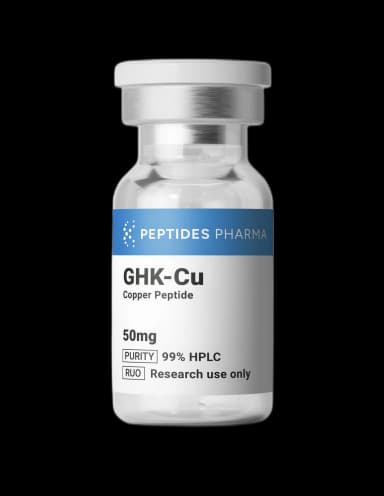
Peptides Pharma's GHK-Cu Research Vial (€139) delivers this copper peptide in an injectable format for research applications beyond topical skin use.
Glutathione: The Master Antioxidant
Glutathione is the body's primary endogenous antioxidant — and its levels decline significantly with age.
Role in ageing: Oxidative stress — the accumulation of reactive oxygen species (ROS) damage — is one of the primary hallmarks of ageing. Glutathione is the body's main defence against oxidative damage, protecting: - DNA from mutations - Mitochondrial membranes from lipid peroxidation - Proteins from oxidative modification - Cell membranes from free radical damage
Published evidence: - Studies show glutathione levels decline 10-15% per decade after age 40 - Supplementation with glutathione (IV or injectable) has been shown to reduce oxidative stress markers in clinical studies - Skin brightening effects documented in multiple clinical trials (melanin regulation) - Immune function support: glutathione is essential for lymphocyte proliferation and natural killer cell activity
Why injectable vs oral? Oral glutathione has notoriously poor bioavailability (<5%) — it is broken down into constituent amino acids during digestion. Peptides Pharma's Glutathione Research Vial (€99) delivers the intact tripeptide subcutaneously at near-100% bioavailability.
Evidence strength: Strong evidence for the role of glutathione in ageing. Good clinical evidence for injectable forms. Well-established biochemistry.
RECOMMENDED PRODUCT
Growth Hormone Peptides: CJC-1295 & Ipamorelin
Growth hormone (GH) decline is one of the most clinically significant hormonal changes associated with ageing — GH production falls roughly 14% per decade from age 30.
CJC-1295 + Ipamorelin research: These two peptides are studied together as a GH optimisation stack: - CJC-1295 stimulates GHRH receptors, extending GH production windows - Ipamorelin selectively activates ghrelin receptors, triggering natural GH pulses - Together, they amplify endogenous GH release without the risks associated with exogenous GH injection
Age-related GH effects studied: - Body composition: Research links GH optimisation to reduced visceral fat and improved lean mass - Skin quality: GH stimulates collagen synthesis and skin thickness - Sleep quality: GH secretion is linked to deep sleep architecture - Bone density: GH supports osteoblast activity and bone mineralisation - Cognitive function: GH receptors are abundant in the hippocampus (memory centre)
Evidence strength: Moderate. Individual peptide mechanisms are well-characterised. The combination's effects on ageing-related parameters are supported by GH physiology research but direct long-term human trial data for this specific combination is limited.
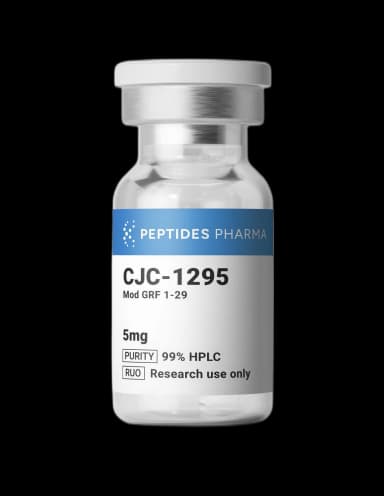
Peptides Pharma offers CJC-1295 (€109) and Ipamorelin (€109) as separate 30-day vial systems, commonly purchased together for GH optimisation research.
Building an Anti-Ageing Research Protocol
Based on the published evidence, a comprehensive anti-ageing research protocol might target multiple hallmarks of ageing:
Cellular energy & DNA repair: NAD+ (Peptides Pharma Research Vial €189 or NAD+ vial €299) - Targets: Sirtuin activation, PARP-mediated DNA repair, mitochondrial function
Gene expression & structural repair: GHK-Cu (Peptides Pharma Research Vial €139) - Targets: 4,000+ gene modulation, collagen synthesis, stem cell support
Antioxidant defence: Glutathione (Peptides Pharma Research Vial €99) - Targets: Oxidative stress reduction, immune support, cellular protection
Hormonal optimisation: CJC-1295 + Ipamorelin (Peptides Pharma Research Vials €109 each) - Targets: Endogenous GH stimulation, body composition, sleep, bone density
Total cost for full protocol: €645-€745/month (depending on NAD+ format)
Budget-friendly options: - NAD+ alone: €189-€299 (addresses the most fundamental ageing mechanism) - GHK-Cu + Glutathione: €238 (skin, antioxidant, gene modulation) - CJC-1295 + Ipamorelin: €218 (hormonal optimisation)
Volume discounts of 5-15% apply for multi-unit Peptides Pharma orders, reducing costs for comprehensive protocols.
Important: Anti-ageing research is an evolving field. These protocols are based on current published evidence and are offered for research purposes only.