A comprehensive comparison of ipamorelin and CJC-1295 — two growth hormone peptides with distinct mechanisms and powerful synergy when used together.
9 min read · Updated 2026-03-05
Introduction to Growth Hormone Peptides
Growth hormone (GH) is one of the most important hormones in the human body, regulating muscle growth, fat metabolism, bone density, immune function, and tissue repair. Natural GH production peaks during adolescence and declines steadily thereafter — falling by approximately 14% per decade after age 30.
Rather than administering synthetic GH directly (which carries significant regulatory and safety considerations), researchers have turned to growth hormone secretagogues — peptides that stimulate the body's own GH production through natural pathways. This approach preserves the pulsatile pattern of GH release, mimicking the body's natural rhythm rather than creating the sustained, supraphysiological levels associated with exogenous GH.
Two peptides dominate this research space: ipamorelin and CJC-1295. They work through different receptors and mechanisms, making them both individually valuable and remarkably synergistic when combined.
This guide examines each peptide in detail, compares their properties head-to-head, and explains why the combination protocol has become one of the most popular in UK growth hormone research.
Ipamorelin: The Selective GH Secretagogue
Ipamorelin is a synthetic pentapeptide (five amino acids) that belongs to the growth hormone secretagogue class. It was developed in the 1990s as a more selective alternative to earlier GH-releasing peptides like GHRP-6 and GHRP-2.
Mechanism of Action Ipamorelin stimulates GH release by binding to the ghrelin/growth hormone secretagogue receptor (GHS-R) in the anterior pituitary gland. When ipamorelin binds this receptor, it triggers a signalling cascade that causes somatotroph cells to release stored growth hormone into the bloodstream.
What makes ipamorelin unique is its selectivity. Unlike older GH secretagogues: - It does not significantly increase cortisol (the stress hormone) - It does not significantly increase prolactin (which can cause unwanted effects) - It does not increase appetite (unlike GHRP-6, which strongly stimulates hunger via ghrelin pathways) - It produces a clean, isolated GH pulse without broad endocrine disruption
This selectivity makes ipamorelin the preferred choice for researchers who want to study GH release in isolation, without the confounding effects of cortisol, prolactin, or appetite changes.
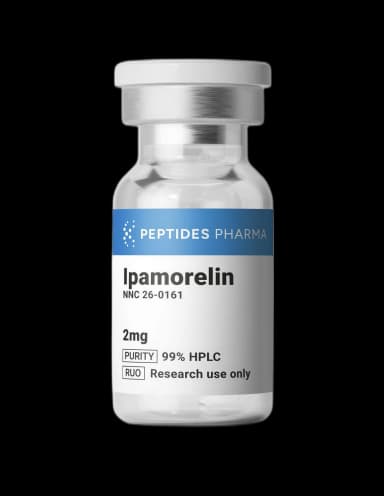
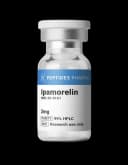
Molecular Profile: - Sequence: Aib-His-D-2-Nal-D-Phe-Lys-NH₂ - Molecular Weight: 711.85 g/mol - Classification: GH secretagogue (GHS-R agonist) - Half-life: Approximately 2 hours - GH peak: 30–45 minutes after administration - Peptides Pharma Ipamorelin Vial: 10 mg, 30-day supply, >99% purity, €119
RECOMMENDED PRODUCT
CJC-1295: The GHRH Analogue
CJC-1295 is a synthetic analogue of growth hormone releasing hormone (GHRH) — the hypothalamic hormone that signals the pituitary to produce and release growth hormone. Two forms exist: CJC-1295 with DAC (Drug Affinity Complex) and CJC-1295 without DAC (also called Modified GRF 1-29 or Mod GRF).
Mechanism of Action CJC-1295 binds to the GHRH receptor on pituitary somatotroph cells. This is a completely different receptor from the one targeted by ipamorelin (GHS-R). Activation of the GHRH receptor stimulates: - GH gene transcription: Increases the production of new growth hormone molecules - GH secretion: Promotes the release of both newly synthesised and stored GH - Somatotroph proliferation: May increase the number of GH-producing cells over time
CJC-1295 without DAC (Mod GRF 1-29): - Half-life: approximately 30 minutes - Produces a sharp, defined GH pulse similar to natural GHRH - Cleared quickly, allowing multiple daily administrations - Preferred by researchers studying acute GH responses
CJC-1295 with DAC: - Half-life: approximately 8 days (dramatically extended by the DAC modification) - Produces a sustained elevation of GH and IGF-1 levels - Single weekly administration is sufficient - DAC binds to albumin in the blood, preventing rapid clearance
Key Distinction from Ipamorelin: While ipamorelin triggers GH release from existing stores (like pressing a "release" button), CJC-1295 amplifies the entire GH production and release process (like turning up the volume). This is why the two peptides work through completely independent pathways — and why combining them produces synergistic effects.
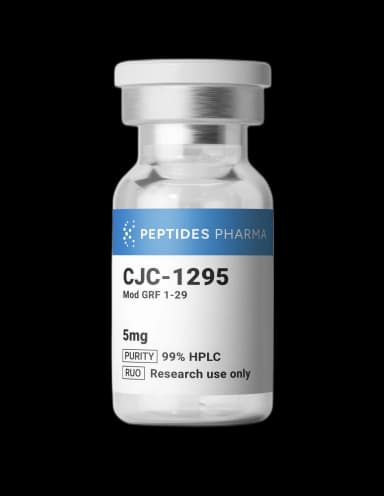
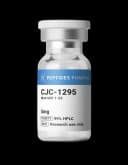
Molecular Profile (CJC-1295 without DAC): - Sequence: Tyr-D-Ala-Asp-Ala-Ile-Phe-Thr-Gln-Ser-Tyr-Arg-Lys-Val-Leu-Ala-Gln-Leu-Ser-Ala-Arg-Lys-Leu-Leu-Gln-Asp-Ile-Leu-Ser-Arg-NH₂ - Molecular Weight: 3,367.9 g/mol - Classification: GHRH analogue - Peptides Pharma CJC-1295 Vial: 10 mg, 30-day supply, >99% purity, €119
Head-to-Head Comparison
Here is a direct comparison of ipamorelin and CJC-1295 across the dimensions most relevant to UK researchers.
Receptor Target: - Ipamorelin: GHS-R (ghrelin receptor) in the pituitary - CJC-1295: GHRH receptor in the pituitary - Verdict: Completely independent receptors — no competition or cross-reactivity
GH Release Pattern: - Ipamorelin: Sharp, rapid pulse peaking at 30–45 minutes - CJC-1295 (no DAC): Moderate pulse peaking at 30–60 minutes with broader duration - CJC-1295 (with DAC): Sustained elevation over days - Verdict: Ipamorelin for studying acute GH pulses; CJC-1295 with DAC for sustained GH elevation
Selectivity: - Ipamorelin: Highly selective — minimal cortisol, prolactin, or appetite effects - CJC-1295: Selective for GH axis but can mildly increase cortisol and prolactin at higher doses - Verdict: Ipamorelin is more selective and better tolerated in isolation
Half-Life: - Ipamorelin: ~2 hours - CJC-1295 (no DAC): ~30 minutes - CJC-1295 (with DAC): ~8 days - Verdict: Depends on protocol — DAC version offers once-weekly convenience
Dosing Frequency: - Ipamorelin: 1–3 times daily for acute studies - CJC-1295 (no DAC): 1–3 times daily - CJC-1295 (with DAC): Once or twice weekly - Verdict: CJC-1295 with DAC is the most convenient for multi-week protocols
Side Effect Profile: - Ipamorelin: Minimal — occasional flushing, mild headache - CJC-1295: Mild — flushing, water retention at higher doses, occasional headache - Verdict: Both well-tolerated; ipamorelin slightly cleaner
Research Evidence Base: - Ipamorelin: Moderate — several published studies, Phase 2 clinical trial data - CJC-1295: Moderate — published pharmacokinetic and pharmacodynamic studies - Verdict: Comparable evidence bases
RECOMMENDED PRODUCT
The Synergy Effect: Combining Ipamorelin and CJC-1295
The combination of ipamorelin and CJC-1295 is not merely additive — it is synergistic. This means the combined GH release exceeds what either peptide produces individually, by a significant margin.
Why Synergy Occurs: The two peptides stimulate GH release through independent, complementary mechanisms:
1. CJC-1295 activates the GHRH receptor, which: - Increases cAMP (cyclic adenosine monophosphate) in somatotroph cells - Upregulates GH gene transcription - Primes somatotrophs to release GH
2. Ipamorelin activates the GHS-R (ghrelin receptor), which: - Increases intracellular calcium via the IP3/DAG pathway - Triggers immediate exocytosis of GH-containing vesicles - Amplifies the effect of GHRH signalling when both pathways are active simultaneously
When both receptors are activated at the same time, the two signalling cascades converge on the same somatotroph cells, producing a GH release that is estimated to be 3–5 times greater than either peptide alone. This is sometimes called the "priming and triggering" effect — CJC-1295 primes the cell, and ipamorelin triggers the release.
Combination Protocol Considerations: - Administration: Both peptides are typically administered simultaneously (within the same session) - Timing: Best administered in the evening before sleep, aligning with the natural nocturnal GH pulse - Fasting: GH release is enhanced when administered in a fasted state (2+ hours after last meal) - Duration: Standard combination protocols run 8–12 weeks, followed by a 4-week washout period - Monitoring: Researchers should track IGF-1 levels as a proxy for sustained GH activity
Peptides Pharma Combination: - Ipamorelin Vial (10 mg, €119) + CJC-1295 Vial (10 mg, €119) - Total: €218 for a complete 30-day dual-peptide GH research protocol - Both vials are pre-mixed, >99% purity, and shipped with worldwide delivery
Practical Considerations for UK Researchers
For researchers in the UK looking to incorporate GH peptides into their protocols, here are the key practical considerations.
Legality Both ipamorelin and CJC-1295 are legal to purchase and possess in the UK for research purposes. They are not controlled under the Misuse of Drugs Act or the Psychoactive Substances Act. Peptides Pharma sells both compounds clearly labelled for research use only.
Storage Both peptides require refrigerated storage at 2–8°C. Peptides Pharma's lyophilized vials have a 24-month shelf life when stored correctly. After first use, vials should be used within 30 days.
Quality Assurance Growth hormone peptides are among the most commonly counterfeited research compounds. Low-purity or degraded product will produce inconsistent GH responses, undermining research validity. Peptides Pharma addresses this with: - >99% purity (HPLC verified) - Batch-specific Certificates of Analysis from independent third-party laboratories - GMP manufacturing in certified facilities in Switzerland - 0.22μm sterile filtration and gamma ray sterilisation
Choosing Between Pen and Vial Peptides Pharma's lyophilized vials offer significant advantages over traditional vials for GH peptide research: - No reconstitution required — eliminates concentration errors - Precise dosing — factory-calibrated precise dosing mechanism - Reduced contamination risk — sealed cartridge system - 24-month shelf life — compared to 14–30 days for reconstituted vials
Getting Started For researchers new to GH peptide protocols, starting with ipamorelin alone is recommended to establish baseline GH response before adding CJC-1295 for synergistic effects. This stepwise approach allows better characterisation of each peptide's contribution.
Peptides Pharma offers both ipamorelin and CJC-1295 at €119 per vial, with worldwide delivery and full documentation for research records.