An honest, evidence-based answer to the most common peptide question. What do published studies actually demonstrate? We review the data for every major research peptide.
10 min read · Updated 2026-03-06
The Honest Answer: It Depends on the Peptide
"Do peptides work?" is the single most searched peptide question in the UK. The honest answer is: it depends entirely on which peptide, what you mean by 'work', and what level of evidence you require.
Some peptides have extensive clinical trial data demonstrating clear, measurable effects. Others have strong preclinical (animal model) evidence that has not yet been confirmed in large human trials. A few have mostly in vitro (cell culture) data with limited real-world validation.
This article grades each major research peptide on a simple evidence scale: - A — Strong: Multiple human clinical trials with statistically significant outcomes - B — Moderate: Human clinical data exists, supported by strong animal models - C — Preliminary: Strong animal model data, limited or no human clinical trials - D — Early: Primarily in vitro or limited animal data
We present this honestly because informed researchers make better decisions. All Peptides Pharma products are sold for research purposes only.
Grade A: Tirzepatide — Strong Human Clinical Evidence
Evidence grade: A (Strong)
Tirzepatide has the most robust evidence base of any peptide in the research market, backed by Eli Lilly's multi-billion-pound clinical trial programme:
SURPASS trials (Type 2 Diabetes): - 5 Phase III trials, thousands of participants - Statistically significant HbA1c reductions (1.87-2.58%) - Weight loss of 7.5-12.9 kg across dose ranges - Superior to semaglutide in head-to-head comparison
SURMOUNT trials (Obesity): - SURMOUNT-1: 22.5% mean body weight reduction at 72 weeks - Over one-third achieved ≥25% weight loss - Significant improvements in metabolic markers
Regulatory status: FDA approved (Mounjaro, Zepbound), MHRA approved
Verdict: Tirzepatide unequivocally 'works' for its studied indications. The evidence is as strong as it gets in pharmaceutical research.
Peptides Pharma offers Tirzepatide in two formats: Research Vial 10mg (€139) and Tirzepatide Vial 40mg (€249).
RECOMMENDED PRODUCT
Grade B: GHK-Cu and Glutathione — Good Human Data
GHK-Cu — Evidence grade: B (Moderate)
GHK-Cu has human clinical trial data, particularly for topical skin applications: - Controlled trials showing measurable skin firmness, elasticity, and wrinkle improvements - Objective measurements (ultrasound, cutometry) confirming subjective reports - Broad Institute gene expression data showing 4,000+ gene modulation - Strong animal model data for wound healing and tissue remodelling
*Limitation*: Most human data is for topical application. Injectable GHK-Cu research is primarily preclinical.
Glutathione — Evidence grade: B (Moderate)
Glutathione's biochemistry is exceptionally well-established: - Clinical studies demonstrating skin brightening effects (melanin regulation) - IV glutathione studies showing reduced oxidative stress markers - Well-characterised role as the body's primary endogenous antioxidant - Extensive pharmacological and biochemical literature
*Limitation*: Oral glutathione has poor bioavailability (<5%). Most positive clinical data is for IV/injectable routes — which is why Peptides Pharma offers it as an injectable vial.
Verdict: Both compounds have genuine evidence of biological activity in humans. Their mechanisms are well-understood and their effects are measurable.
Grade C: BPC-157, TB-500, CJC-1295, Ipamorelin — Strong Preclinical
BPC-157 — Evidence grade: C (Preliminary)
BPC-157 has one of the largest preclinical evidence bases of any research peptide: - Over 100 published studies across multiple tissue types - Consistent, reproducible results in animal models (tendon, muscle, gut, bone, nerve) - Clear mechanism of action (growth factor upregulation, FAK-paxillin pathway) - No established lethal dose — exceptional safety profile in animals
*Limitation*: Very limited human clinical trial data. Several trials are planned or underway as of 2026.
TB-500 (Thymosin Beta-4) — Evidence grade: C+ (Preliminary to Moderate)
TB-500 benefits from some human clinical data via the parent compound: - Phase III trials for corneal healing (RGN-259 eye drops) - Strong animal data for cardiac repair, wound healing, and anti-fibrosis - Clear mechanism (actin polymerisation, cell migration)
CJC-1295 + Ipamorelin — Evidence grade: C (Preliminary)
Individual mechanisms are well-characterised: - GHRH and ghrelin receptor pathways are thoroughly documented - GH secretagogue effects are measurable and reproducible - Indirect evidence from GH physiology research is extensive
*Limitation*: The specific combination protocol lacks dedicated large-scale clinical trials.
Verdict: These peptides demonstrate clear, reproducible biological activity in controlled research settings. They 'work' in the sense that they produce measurable biological effects. Human clinical validation is still developing.
RECOMMENDED PRODUCT
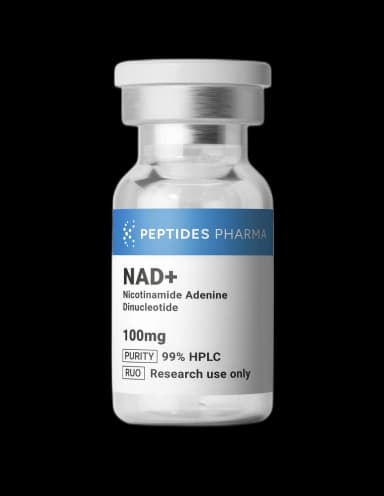
NAD+: A Unique Case — Evidence Grade B+
NAD+ occupies a unique position because it is not a synthetic pharmaceutical compound but an endogenous coenzyme present in every living cell:
What is well-established (Grade A): - NAD+ levels decline with age (measured in human studies) - NAD+ is essential for sirtuin function, PARP activity, and mitochondrial electron transport - NAD+ depletion is causally linked to multiple ageing hallmarks
What is demonstrated in animal models (Grade B-C): - NAD+ repletion reverses age-related muscle, cognitive, and vascular decline in mice - Sirtuin activation via NAD+ extends lifespan in multiple model organisms - DNA repair capacity improves with NAD+ supplementation
Human clinical data (Grade B): - NMN supplementation improved muscle insulin sensitivity in older adults - NR supplementation safely raised NAD+ levels in human trials - Aerobic capacity and walking speed improvements in older adults - IV NAD+ therapy is used clinically (though evidence quality varies)
Verdict: NAD+'s fundamental biology is beyond dispute. Its role in ageing is supported by strong evidence. The optimal route and dose for human supplementation is still being refined — but the biological rationale is among the strongest of any anti-ageing intervention.
Peptides Pharma's injectable NAD+ formats (Research Vial €189, NAD+ vial €299) offer direct delivery, bypassing the oral conversion limitations of NMN/NR.
Red Flags: When Peptide Claims Are Overstated
While many peptides have genuine research evidence, the market is rife with exaggerated claims. Watch for these red flags:
1. "Clinically proven" — unless accompanied by specific trial citations, this phrase is often misleading. Ask: which clinical trial? How many participants? Was it peer-reviewed?
2. Before-and-after photos — individual results are not scientific evidence. Controlled studies with objective measurements are.
3. "Cures" or "treats" — research peptides are not licensed medicines. Any supplier claiming their products cure diseases is breaking regulations.
4. No COA provided — if a supplier cannot provide batch-specific Certificates of Analysis with HPLC purity data, you cannot verify what you're purchasing.
5. Extreme claims with Grade C/D compounds — if a peptide only has animal data, claims about definitive human outcomes are premature.
Peptides Pharma's commitment: We present evidence honestly, categorised by quality. We provide batch-specific COAs with every order. We never make therapeutic claims. Our products are >99% pure, GMP-manufactured, and sold for research purposes only.
Do peptides work? The evidence says: many do, for specific measurable outcomes, at varying levels of clinical validation. The key is knowing which evidence applies to which compound.