What is BPC-157?
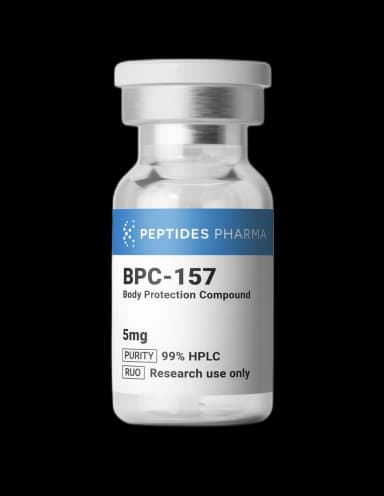
BPC-157 (Body Protection Compound-157) is classified as a gastric pentadecapeptide. With a molecular weight of 1419.53 Da and formula C62H98N16O22, it is one of the most studied compounds in its class.
This encyclopedia entry covers the molecular profile, mechanism of action, research history, key published studies, and research applications of BPC-157. It is part of the Peptides Pharma Peptide Encyclopedia, a scientific reference for researchers working with peptide compounds.
Molecular Profile
MOLECULAR FORMULA
C62H98N16O22
MOLECULAR WEIGHT
1419.53 Da
CLASSIFICATION
Gastric Pentadecapeptide
AMINO ACID SEQUENCE / STRUCTURE
Gly-Glu-Pro-Pro-Pro-Gly-Lys-Pro-Ala-Asp-Asp-Ala-Gly-Leu-Val
Mechanism of Action
BPC-157 exerts its biological effects through multiple interconnected pathways. At the molecular level, it modulates the nitric oxide (NO) system, promoting vasodilation and angiogenesis — the formation of new blood vessels — in injured tissue. This enhanced blood supply is critical for delivering oxygen and nutrients to damaged areas, accelerating the healing process.
The peptide also interacts with the FAK-paxillin signalling pathway, which governs cell migration, adhesion, and proliferation. By upregulating growth factors such as EGF, VEGF, and FGF, BPC-157 stimulates fibroblast activity and collagen deposition, essential processes in tendon, ligament, and muscle repair.
Additionally, BPC-157 has demonstrated cytoprotective properties in the gastrointestinal tract, protecting mucosal integrity against damage from NSAIDs, alcohol, and stress-induced lesions. Its interaction with the dopaminergic and serotonergic systems also points to neuroprotective and mood-modulating potential, making it one of the most versatile peptides under active investigation.
Research History
BPC-157 was first isolated from human gastric juice in the early 1990s by a research team at the University of Zagreb, led by Professor Predrag Sikiric. The discovery that a stable gastric peptide fragment could accelerate wound healing across multiple tissue types attracted significant scientific interest.
Since its initial characterisation, BPC-157 has been the subject of over 100 peer-reviewed studies, primarily in animal models. These studies have investigated its effects on tendon healing, gastrointestinal protection, neurological recovery, and even bone fracture repair. While human clinical trials remain limited, the breadth and consistency of preclinical data have made BPC-157 one of the most widely researched peptides in regenerative medicine.
Key Published Studies
Stable gastric pentadecapeptide BPC 157 in trials for inflammatory bowel disease
2006
Demonstrated significant healing of inflammatory bowel lesions in animal models with oral and parenteral administration.
Pentadecapeptide BPC 157 enhances the growth hormone receptor expression in tendon fibroblasts
2014
Showed BPC-157 upregulates GH receptor expression, promoting tendon cell proliferation and collagen synthesis.
BPC 157 and the NO system in the healing of damaged tissues
2019
Established the central role of nitric oxide modulation in BPC-157's healing mechanism across multiple tissue types.
BPC 157 counteracts the effect of NSAIDs on the gastrointestinal tract
2010
Demonstrated complete reversal of NSAID-induced gastric lesions and intestinal damage in rat models.
Research Applications
Tendon and ligament repair research
Gastrointestinal healing studies
Neuroprotection and nerve regeneration
Wound healing acceleration
Anti-inflammatory response modulation
Muscle tissue recovery research
Bone fracture healing studies
RECOMMENDED PRODUCT