
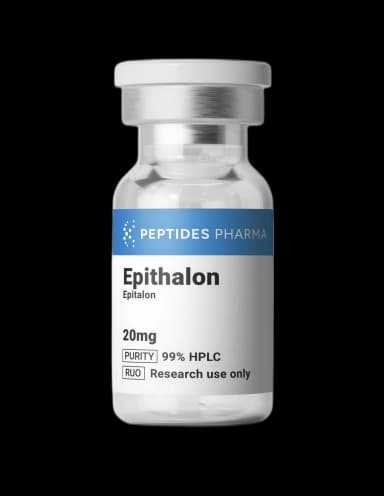

How Epithalon Targets Epigenetic Aging
Epithalon (also known as Epitalon or Epithalone) is a synthetic tetrapeptide (Ala-Glu-Asp-Gly) studied primarily for its ability to activate telomerase — the enzyme responsible for maintaining telomere length.
Telomerase Activation: Telomeres shorten with each cell division, eventually triggering cellular senescence. Epithalon has been shown to stimulate telomerase activity, potentially slowing or reversing this process.
Pineal Gland Regulation: Research suggests Epithalon may regulate pineal gland function and melatonin production, with implications for circadian rhythm and antioxidant defence.
Gene Expression: Studies by Khavinson and colleagues have demonstrated Epithalon's ability to modulate gene expression patterns associated with aging, including activation of genes involved in DNA repair and cell cycle regulation.
Cycling Protocol: Epithalon is typically administered in cycles (10-20 consecutive days followed by extended rest periods), as its telomerase-activating effects persist beyond the active administration period.
How MOTS-C Addresses Mitochondrial Aging
MOTS-C (Mitochondrial Open Reading Frame of the 12S rRNA Type-C) is a mitochondria-derived peptide discovered in 2015 that has rapidly become a focal point of longevity research.
Mitochondrial Signalling: As a mitochondrial-derived peptide (MDP), MOTS-C represents a new class of signalling molecules that communicate mitochondrial status to the rest of the cell.
AMPK Activation: MOTS-C activates AMP-activated protein kinase (AMPK), the master metabolic regulator also activated by exercise. This promotes glucose uptake, fatty acid oxidation, and metabolic flexibility.
Exercise Mimetic: Research by Lee et al. demonstrated MOTS-C enhances physical performance, improves glucose metabolism, and activates metabolic pathways typically stimulated by exercise — earning it the designation of 'exercise mimetic peptide'.
Age-Related Decline: Circulating MOTS-C levels decline significantly with age, correlating with metabolic dysfunction. Exogenous supplementation may help restore youthful metabolic signalling.
Combining Epithalon and MOTS-C for Longevity Research
These two peptides target complementary hallmarks of aging and represent a cutting-edge dual-pathway longevity protocol:
Epithalon addresses: Telomere attrition (epigenetic aging), pineal function, gene expression modulation MOTS-C addresses: Mitochondrial dysfunction (metabolic aging), AMPK activation, exercise-mimetic effects
Together, they cover two of the nine recognised hallmarks of aging simultaneously — making this combination one of the most comprehensive anti-aging research protocols based on current science.
Protocol Design: Epithalon's cycling pattern (10-20 days on, months off) pairs naturally with MOTS-C's continuous daily administration. Researchers can run MOTS-C as a baseline protocol while layering Epithalon cycles on top.
Both compounds are available as lyophilized vials from Peptides Pharma, reconstituted with bacteriostatic water for subcutaneous administration.
Which Should You Choose?
Choose Epithalon if your primary research focus is: - Telomerase biology and telomere length maintenance - Epigenetic aging markers and gene expression - Pineal gland function and melatonin regulation - Longer-established research base (since 1980s)
Choose MOTS-C if your primary research focus is: - Mitochondrial function and bioenergetic aging - Metabolic homeostasis and insulin sensitivity - Exercise mimetic effects and AMPK signalling - Physical performance and body composition
Choose both if: - You want a multi-hallmark longevity protocol - Your research spans both epigenetic and metabolic aging - You're studying synergistic effects of multi-pathway interventions - Comprehensive aging biology is the focus of your research programme

