
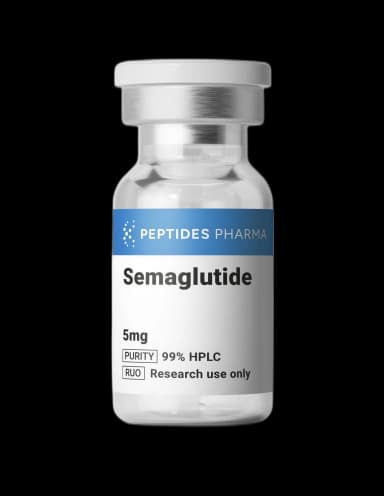
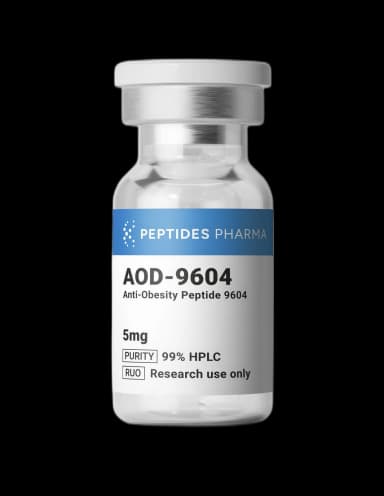
How Semaglutide Drives Weight Reduction
Semaglutide is a synthetic GLP-1 receptor agonist with 94% homology to human GLP-1. Its weight management effects operate through multiple pathways:
Appetite Suppression: Semaglutide activates GLP-1 receptors in the hypothalamus, particularly the arcuate nucleus, reducing hunger signals and increasing satiety. Clinical trial subjects consistently report reduced food intake and decreased food cravings.
Gastric Emptying: By slowing gastric emptying, semaglutide prolongs the feeling of fullness after meals, further reducing caloric intake.
Insulin Sensitivity: Semaglutide enhances glucose-dependent insulin secretion and suppresses glucagon release, improving metabolic efficiency and reducing the insulin resistance that promotes fat storage.
The STEP-1 trial demonstrated 14.9% mean weight reduction at 68 weeks — a landmark result that established semaglutide as a reference compound in metabolic research.
How AOD-9604 Stimulates Fat Metabolism
AOD-9604 (Advanced Obesity Drug 9604) is a modified peptide fragment corresponding to amino acids 177-191 of human growth hormone, with the addition of a tyrosine residue. Research suggests it retains the lipolytic activity of hGH without its growth-promoting or diabetogenic effects:
Lipolysis Stimulation: AOD-9604 stimulates the breakdown of stored triglycerides in adipose tissue, releasing free fatty acids for energy utilisation. This effect is mediated through the beta-3 adrenergic receptor pathway.
Lipogenesis Inhibition: Studies indicate AOD-9604 inhibits the synthesis and storage of new fat, reducing the conversion of dietary carbohydrates into stored triglycerides.
Selective Action: Unlike full-length hGH, AOD-9604 does not affect IGF-1 levels, blood glucose, or insulin sensitivity. This selectivity makes it a valuable research tool for studying fat metabolism in isolation from broader hormonal effects.
Comparing Research Applications
Semaglutide and AOD-9604 serve different research needs:
Semaglutide is optimal for: Comprehensive metabolic research involving appetite regulation, insulin signalling, and body composition. Its robust clinical evidence base makes it the reference standard for GLP-1-based weight management research. However, its broad mechanism means it affects multiple hormonal systems simultaneously.
AOD-9604 is optimal for: Targeted fat metabolism research without confounding hormonal variables. Its selective lipolytic action allows researchers to study adipose tissue biology in isolation. It is particularly useful when the research question requires fat-specific intervention without appetite suppression or insulin modulation.
Both compounds are available as lyophilized vials from Peptides Pharma, reconstituted with bacteriostatic water for subcutaneous administration.
Which Should You Choose?
Choose Semaglutide if your primary research focus is: - Comprehensive weight management with strong clinical evidence - Appetite regulation and central satiety signalling - Insulin sensitivity and type 2 diabetes models - GLP-1 receptor pharmacology - Research requiring a well-validated reference compound
Choose AOD-9604 if your primary research focus is: - Targeted fat metabolism without hormonal perturbation - Lipolysis and lipogenesis mechanisms in adipose tissue - Weight management research in GH-sensitive populations - Studying fat-specific pathways in isolation - Research requiring minimal systemic side effects
Choose both if: - You are comparing central vs peripheral mechanisms of weight management - Your research requires understanding complementary fat reduction pathways - You want to study whether appetite suppression and direct lipolysis produce synergistic effects

