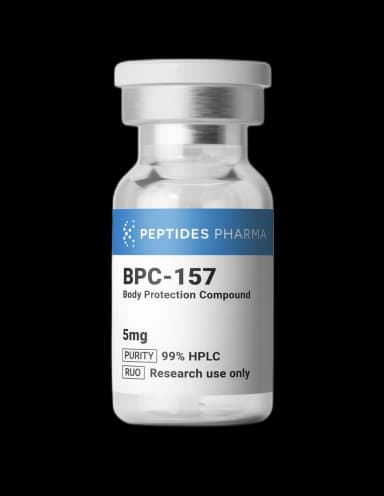
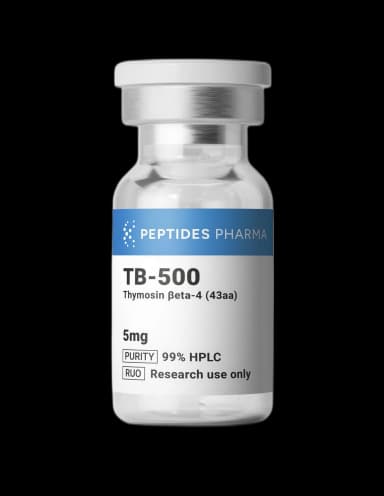
A detailed head-to-head comparison of BPC-157 and TB-500 — the two most popular recovery peptides in the UK research community. Understand their distinct mechanisms and when to use each.
9 min read · Updated 2026-03-05
Introduction: Two Peptides, Two Approaches to Recovery
BPC-157 and TB-500 are the two most widely researched recovery peptides in the world, and for good reason. Both have demonstrated remarkable tissue-repair properties in published studies, yet they work through fundamentally different biological mechanisms.
For UK researchers, understanding these differences is essential for designing effective protocols. Choosing the wrong peptide for your research question — or missing the opportunity to use both together — can mean the difference between compelling results and inconclusive data.
This guide provides a thorough, evidence-based comparison of BPC-157 and TB-500 across every dimension that matters: mechanism of action, research evidence, tissue specificity, dosing, side effects, and combination protocols. By the end, you'll have a clear framework for choosing the right recovery peptide — or peptides — for your research.
Both compounds are available from Peptides Pharma in pharmaceutical-grade, lyophilized vials with >99% purity and worldwide delivery.
Origins and Molecular Profiles
Understanding where each peptide comes from helps explain why they work the way they do.
BPC-157 (Body Protection Compound-157) - Origin: Derived from a protein found in human gastric juice - Sequence: 15 amino acids (Gly-Glu-Pro-Pro-Pro-Gly-Lys-Pro-Ala-Asp-Asp-Ala-Gly-Leu-Val) - Molecular Weight: 1,419.53 g/mol - Classification: Pentadecapeptide - Unique property: Remarkably stable in gastric acid — one of very few peptides that survives the stomach environment - Discovery: First characterised in the early 1990s by Professor Predrag Sikiric's research group in Zagreb
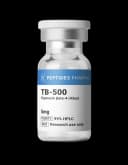
TB-500 (Thymosin Beta-4 Fragment) - Origin: Synthetic fragment of Thymosin Beta-4, a protein produced by the thymus gland - Active sequence: 43 amino acids (the active region of the full 43-amino-acid Thymosin Beta-4 molecule) - Molecular Weight: 4,963 g/mol (full Thymosin Beta-4) - Classification: Actin-sequestering peptide - Unique property: Binds directly to G-actin (globular actin), the building block of the cellular cytoskeleton - Discovery: Thymosin Beta-4 was first isolated from the thymus in the 1960s; its wound-healing properties were characterised in the 2000s
The size difference is notable: TB-500 is roughly 3.5 times larger than BPC-157. This affects pharmacokinetics, half-life, and tissue distribution — all of which influence how each peptide is used in research.
RECOMMENDED PRODUCT
Mechanism of Action: Head-to-Head
This is where the two peptides diverge most significantly, and understanding these differences is the key to choosing the right compound.
BPC-157 Mechanisms: - Growth factor upregulation: Stimulates VEGF, EGF, FGF, and HGF — promoting tissue repair at multiple levels - Nitric oxide (NO) system: Modulates the NO system to improve blood flow to injured tissues - FAK-paxillin pathway: Activates focal adhesion kinase signalling, essential for cell migration and wound closure - Anti-inflammatory: Reduces pro-inflammatory cytokines (TNF-α, IL-6) while preserving protective immune responses - Dopaminergic interaction: Modulates dopamine receptors — unique among recovery peptides, with implications for gut-brain axis research - Gastroprotection: Directly protects gastric and intestinal mucosa through cytoprotective mechanisms
TB-500 Mechanisms: - Actin regulation: Binds G-actin and promotes actin polymerisation, enabling cell migration and tissue remodelling - Angiogenesis: Stimulates new blood vessel formation through VEGF-independent pathways - Anti-inflammatory: Potent suppression of inflammatory mediators, particularly in cardiovascular and joint tissues - Stem cell activation: Promotes migration and differentiation of stem and progenitor cells to injury sites - Laminin and fibronectin production: Increases extracellular matrix proteins critical for tissue scaffolding - MMP regulation: Modulates matrix metalloproteinases to balance tissue remodelling
The key distinction: BPC-157 works primarily through growth factor and signalling pathway modulation, while TB-500 works through direct cytoskeletal regulation and cell migration. They address tissue repair from completely different angles.
Research Evidence: Tissue-by-Tissue Comparison
Each peptide has a distinct evidence profile across different tissue types. This comparison helps researchers match the peptide to their specific research focus.
Tendon and Ligament Repair - BPC-157: Strong evidence. Multiple studies (Staresinic 2003, Chang 2011) demonstrate accelerated tendon healing, improved biomechanical strength, and enhanced tendon-to-bone integration. Edge: BPC-157 - TB-500: Moderate evidence. Studies show improved tendon remodelling, but fewer published papers specifically on tendons.
Muscle Injury Recovery - BPC-157: Strong evidence. Pevec et al. (2010) showed accelerated healing of crush-injured muscle with improved functional outcomes. - TB-500: Strong evidence. Thymosin Beta-4 has demonstrated rapid muscle fibre regeneration and reduced fibrosis in multiple models. Edge: Comparable
Wound Healing and Skin - BPC-157: Moderate evidence. Accelerates wound closure, but fewer skin-specific studies. - TB-500: Strong evidence. Thymosin Beta-4 is one of the most extensively studied peptides for wound healing, with demonstrated efficacy in corneal, dermal, and cardiac wound models. Edge: TB-500
Gastrointestinal Healing - BPC-157: Extensive evidence. The definitive peptide for GI research — originally discovered for its gastroprotective properties. Dozens of studies on ulcers, IBD models, and mucosal protection. Edge: BPC-157 (decisively) - TB-500: Minimal GI-specific research.
Cardiovascular Tissue - BPC-157: Moderate evidence. Some cardioprotective data, particularly regarding arrhythmias. - TB-500: Strong evidence. Thymosin Beta-4 has demonstrated cardiac tissue repair and reduced scarring after myocardial infarction in animal models. Phase 2 clinical trials have been conducted for cardiac applications. Edge: TB-500
Neuroprotection - BPC-157: Strong evidence. Multiple studies on brain injury, spinal cord damage, and peripheral nerve regeneration. - TB-500: Moderate evidence. Some neuroprotective data, primarily related to nerve regeneration. Edge: BPC-157
RECOMMENDED PRODUCT
When to Use Each Peptide
Based on the evidence profiles above, here is a practical decision framework for UK researchers.
Choose BPC-157 when your research focuses on: - Gastrointestinal healing (ulcers, IBD models, mucosal protection) - Tendon and ligament repair (strongest evidence base) - Neuroprotection (brain injury, nerve regeneration) - Inflammation modulation (cytokine regulation without immune suppression) - Gut-brain axis research (dopaminergic interactions) - Oral administration studies (BPC-157 is uniquely stable in gastric acid)
Choose TB-500 when your research focuses on: - Wound healing (dermal, corneal, or cardiac wounds) - Cardiovascular repair (myocardial infarction, vascular injury) - Cell migration studies (actin dynamics, stem cell mobilisation) - Angiogenesis research (new blood vessel formation) - Fibrosis prevention (reduced scar tissue formation) - Hair follicle research (follicle stem cell activation)
Choose BOTH when: - You want the most comprehensive recovery protocol — addressing both growth factor signalling (BPC-157) and cytoskeletal/cell migration pathways (TB-500) - Your research involves complex tissue injuries that require both vascular support and structural repair - You're studying synergistic peptide effects — an increasingly popular research area - You need to address both local tissue repair (BPC-157 excels) and systemic cell mobilisation (TB-500 excels)
The Combination Protocol: BPC-157 + TB-500
Using BPC-157 and TB-500 together is one of the most popular protocols in the UK peptide research community, and the rationale is compelling.
Why Combine? BPC-157 and TB-500 target complementary, non-overlapping pathways: - BPC-157 upregulates growth factors and modulates the NO system → creates the biochemical environment for healing - TB-500 promotes cell migration and actin dynamics → provides the cellular workforce that executes healing
Think of it this way: BPC-157 builds the road, TB-500 drives the trucks. Together, they address both the signalling infrastructure and the physical cell movement needed for complete tissue repair.
Combination Protocol Considerations: - Timing: Most researchers administer both peptides concurrently (same day, different injection sites) rather than sequentially - Duration: Standard combination protocols run 4–8 weeks, with some extended protocols lasting 12 weeks - Dosing: Each peptide is used at its standard individual dose — combination does not require dose reduction - Injection sites: Alternate sites or use different sites for each peptide to avoid local tissue irritation
Published Support for Combination Use: While no study has directly compared the combination to either peptide alone in a controlled trial, the non-overlapping mechanisms of action provide strong theoretical support. Both peptides have demonstrated additive effects on VEGF and angiogenesis — suggesting their combined vascular support may exceed either alone.
Peptides Pharma Combination Options: - BPC-157 Pen (10 mg, 30-day supply, €119) + TB-500 Pen (15 mg, 30-day supply, €119) - Total: €238 for a complete 30-day dual-peptide recovery research protocol - Both vials are pre-mixed, >99% purity, GMP-manufactured, with worldwide delivery