How the shift from traditional vials to lyophilized vials is improving peptide research outcomes — and why delivery method matters more than most researchers realise.
8 min read · Updated 2026-05-10
The Hidden Variable in Peptide Research
When researchers evaluate peptide compounds, they typically focus on purity, mechanism of action, and dosing protocol. The delivery system — how the peptide is stored, prepared, and administered — is often treated as an afterthought.
Yet delivery method can introduce significant variability into research outcomes. Reconstitution errors, contamination events, dosing imprecision, and stability loss can all compromise data quality in ways that are difficult to detect and impossible to retrospectively correct.
The transition from traditional vials to lyophilized vials addresses each of these failure modes. Understanding why delivery matters is essential for researchers who want to produce reliable, reproducible results.
The Vial Workflow: Where Variability Enters
Traditional peptide vial delivery involves multiple manual steps, each introducing potential error:
Step 1 — Reconstitution: - Add bacteriostatic water to lyophilised powder - Volume must be precisely measured (error range: ±5-10%) - Mixing technique matters: too vigorous and the peptide degrades; too gentle and incomplete dissolution occurs - Each reconstitution event is unique — no two are identical
Step 2 — Storage post-reconstitution: - Reconstituted peptide must be refrigerated immediately - Stability window: typically 2-4 weeks (varies by compound) - Each vial access introduces potential contamination - Temperature excursions during handling accelerate degradation
Step 3 — Dose drawing: - Requires insulin syringe and manual calculation - Reading syringe markings introduces ±10-15% dosing variance - Air bubbles can displace volume, altering the actual dose - Multi-step math: desired dose → concentration → volume in units
Step 4 — Administration: - Requires proper injection technique - Needle selection, injection angle, and site preparation add variables
Each step is a potential failure point. Across a 30-day protocol, these small errors compound, creating noise in research data that can mask or exaggerate true peptide effects.
RECOMMENDED PRODUCT
The Pen Advantage: Eliminating Variables
Precision lyophilized vials collapse the vial workflow into a single step: dial and inject.
Pre-mixed formulation: No reconstitution required. The peptide solution is factory-prepared at an exact concentration, eliminating mixing variability entirely.
Calibrated dosing mechanism: Each click of the vial delivers a factory-verified dose with <2% variance. No syringe math, no volume calculations, no air bubble adjustments.
Sealed cartridge system: The peptide solution remains in a sealed environment until the moment of administration. No repeated vial piercing, no exposure to ambient air, no multi-day contamination accumulation.
Integrated needle system: Bacteriostatic water, insulin syringes attach directly. No separate syringe selection, no dead-space volume losses, no needle gauge decision.
Extended stability: Peptides Pharma vial formulations are engineered for 24-month shelf life at 2-8°C — compared to 2-4 week stability for reconstituted vials.
The result: every administration from a vial system is functionally identical. Dose 1 and dose 30 deliver the same compound at the same concentration with the same precision.
Impact on Research Data Quality
The practical impact of delivery system precision on research outcomes is significant:
Reduced Inter-Subject Variability: In multi-subject research, vial-based protocols introduce different reconstitution batches, different drawing techniques, and different dosing precision across subjects. Vial systems standardise delivery, allowing observed differences to be attributed to biological variation rather than technical noise.
Improved Protocol Compliance: Simpler administration leads to more consistent protocol adherence. Researchers are less likely to skip doses, make calculation errors, or deviate from timing schedules when the administration process takes 30 seconds vs 5-10 minutes.
Better Dose-Response Relationships: With ±10-15% dosing variance from vials, detecting subtle dose-response relationships requires larger sample sizes. Vial precision with proper technique makes dose-response curves cleaner and detectable with smaller subject numbers.
Reduced Wastage: Reconstitution errors, contaminated vials, and dropped syringes waste both compound and research time. Sealed vial systems minimize these losses.
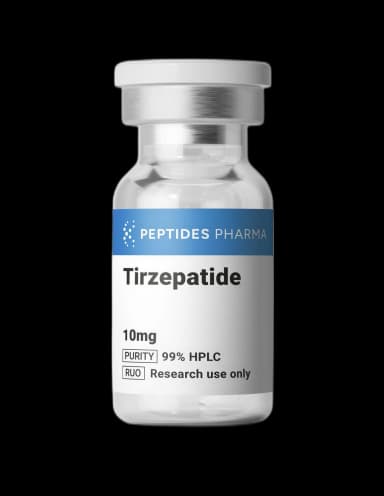
Practical Example: Consider a 30-day tirzepatide protocol at 5 mg/week. With vial dosing (±15% variance), actual weekly doses range from 4.25-5.75 mg. With vial dosing (<2% variance), actual doses are 4.90-5.10 mg. Over 30 days, the cumulative dosing difference between vial and vial can exceed 10% — enough to meaningfully affect metabolic outcomes.
RECOMMENDED PRODUCT
Advanced Research: Semaglutide and Tirzepatide
Peptides Pharma has extended the vial concept into specialised platforms for different research needs:
Tirzepatide Vial (Tirzepatide 40mg — €249): - Lyophilized vial with fixed tirzepatide dose - Designed for established maintenance-phase protocols - One vial = one week, eliminating all intra-week dosing decisions - Factory-sealed for maximum stability and sterility - Premium convenience for researchers running large-scale or long-duration tirzepatide studies
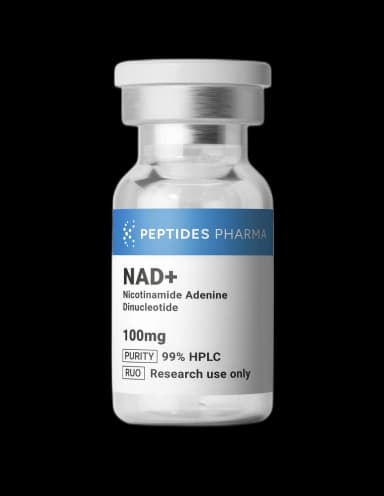
NAD+ Vial (€299): - Adjustable-dose NAD+ platform - Dial-a-dose mechanism for precise titration - Interchangeable cartridge system - Reusable vial body with replaceable NAD+ cartridges - Designed for dose-response and biomarker-guided protocols
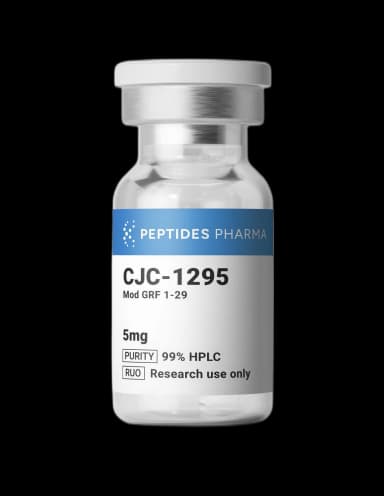
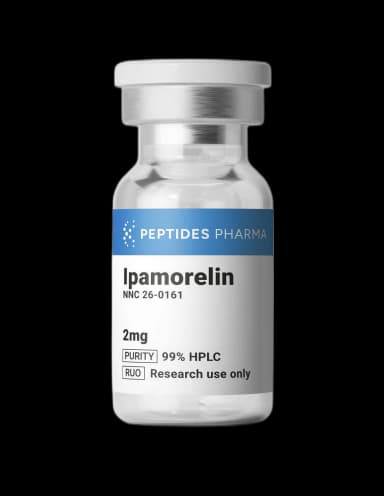
Standard Peptides Pharma Research Vials (€119-189): - Available for BPC-157, TB-500, CJC-1295, Ipamorelin, Tirzepatide, GHK-Cu, Glutathione, NAD+ - 30-day supply per vial - Precision click-dose mechanism - Ready-to-use out of the box
The progression from standard vial → higher-dose vial → specialized vial reflects increasing research sophistication: fixed dose → fixed weekly → adjustable daily. Researchers can choose the delivery system that matches their protocol's complexity.
Making the Switch: Practical Considerations
For researchers transitioning from vials to vial systems, consider the following:
Protocol Adjustments: - Vial dosing may differ from your previous reconstituted concentration — verify the per-unit dose matches your protocol requirements - If your protocol specified vial-based dosing (e.g., "draw 0.1 mL of 5 mg/mL solution"), convert to the vial's native dosing unit - Allow a washout or transition period if switching delivery method mid-protocol
Cost Comparison: - Calculate total cost of ownership: vial + bac water + syringes + needles + alcohol swabs vs vial + insulin syringe needles - Factor in waste reduction (no reconstitution errors, no contaminated vials) - Consider time savings (preparation time × number of subjects × number of doses)
Storage: - Both systems require 2-8°C refrigeration - Vials are more compact and travel-friendly - Sealed vial cartridges are less vulnerable to temperature excursions than reconstituted vial solutions
Ordering: - Peptides Pharma vials ship ready to use — no additional supplies needed beyond disposable insulin syringe needles - Free priority lab delivery on orders over €400 during the Peak Performance campaign - Visit /peak-performance for campaign bundles and pricing
All Peptides Pharma products are sold for research purposes only.