SS-31 and MOTS-C are the two leading mitochondrial peptides in research — but they work through completely different mechanisms. This guide compares them head-to-head.
8 min read · Updated 2026-04-03
Two Approaches to Mitochondrial Research
Mitochondrial dysfunction is one of the nine hallmarks of aging and a driver of age-related disease. Two peptides have emerged as the leading research compounds in this space — but they approach the problem from fundamentally different angles.
SS-31 (Elamipretide) is a synthetic tetrapeptide that directly binds cardiolipin on the inner mitochondrial membrane. It is the first FDA-approved drug targeting mitochondrial dysfunction.
MOTS-C is an endogenous mitochondria-derived peptide (encoded by the 12S rRNA gene) that activates AMPK signalling and metabolic pathways.
Think of it this way: SS-31 repairs the mitochondrial hardware (physical membrane structure), while MOTS-C optimizes the mitochondrial software (metabolic signalling). Both are available as high-purity lyophilized vials from Peptides Pharma.
SS-31: The Structural Approach
SS-31 is unique because it directly interacts with the physical structure of mitochondria:
Target: Cardiolipin on the inner mitochondrial membrane Mechanism: Stabilizes cristae architecture, optimizes electron transport chain, restores cytochrome c function Key Result: Reduces ROS production and enhances ATP synthesis simultaneously Clinical Status: FDA-approved for Barth syndrome (TAZPOWER trial) Aging Data: 14% lifespan extension in mice; 1-hour skeletal muscle rejuvenation
SS-31's advantage is its directness — it physically stabilizes the machinery where energy production occurs. No other peptide interacts with mitochondria at this level.
RECOMMENDED PRODUCT
MOTS-C: The Signalling Approach
MOTS-C works through metabolic signalling rather than direct structural interaction:
Target: AMPK pathway (master metabolic regulator) Mechanism: Activates AMPK, promotes glucose uptake, enhances fatty acid oxidation, stimulates mitochondrial biogenesis Key Result: Exercise-mimetic effects, improved metabolic homeostasis Clinical Status: Preclinical + early clinical studies (discovered 2015) Aging Data: Reversed age-dependent insulin resistance; improved physical performance in aged mice
MOTS-C's advantage is its breadth — by activating AMPK, it triggers a cascade of metabolic improvements that extend beyond mitochondria to whole-body metabolic function.
Head-to-Head Comparison
| Category | SS-31 | MOTS-C | |---|---|---| | Mechanism | Cardiolipin binding (structural) | AMPK activation (signalling) | | Target | Inner mitochondrial membrane | Cytoplasm/nucleus | | Origin | Synthetic (Szeto-Schiller design) | Endogenous (mitochondrial genome) | | FDA Status | Approved (Barth syndrome) | Research compound | | Onset | Minutes to hours (structural) | Days to weeks (metabolic) | | Administration | Daily subcutaneous | Daily subcutaneous | | Cardiac Effects | Strong direct evidence | Indirect metabolic benefit | | Metabolic Effects | Indirect ATP enhancement | Direct AMPK activation | | Exercise Mimetic | No | Yes | | Lifespan Data | 14% extension (mice) | Improved healthspan markers |
RECOMMENDED PRODUCT
When to Use Each — and When to Combine
Choose SS-31 when your research focuses on: - Mitochondrial membrane integrity and cristae architecture - Electron transport chain dysfunction and ATP production - Cardioprotection (heart failure, cardiomyopathy models) - Renal or ophthalmic mitochondrial dysfunction - Rapid mitochondrial restoration (acute models)
Choose MOTS-C when your research focuses on: - Metabolic homeostasis and AMPK-mediated pathways - Exercise physiology and performance research - Insulin resistance and glucose metabolism - Obesity and body composition studies - Broad metabolic aging interventions
Combine both when: - You want to address mitochondrial dysfunction comprehensively - Your research spans both structural and metabolic mitochondrial function - You are investigating synergistic multi-pathway interventions - Aging biology is your primary research focus
Adding NAD+ to both creates the most comprehensive mitochondrial protocol available — the Mitochondrial Research Stack from Peptides Pharma.
Peptides Pharma Mitochondrial Peptides
Peptides Pharma offers both SS-31 and MOTS-C as high-purity lyophilized vials:
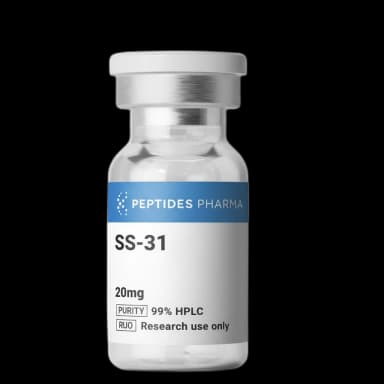
SS-31: Available in 20mg (€89) and 50mg (€199) vials. >99% HPLC purity, full COA with mass spectrometry data.
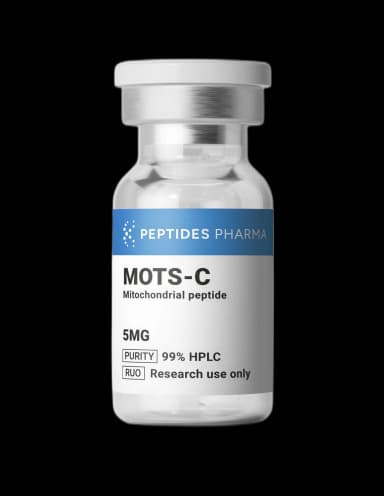
MOTS-C: Available in 5mg vials (€89). >99% HPLC purity, full COA included.
Mitochondrial Research Stack: SS-31 + MOTS-C + NAD+ bundle at 15% savings — the most comprehensive mitochondrial protocol available.
All compounds are manufactured in GMP-certified facilities, undergo 0.22μm sterile filtration, and ship with cold-chain packaging worldwide.